








Spotting the Team's 'Shape'
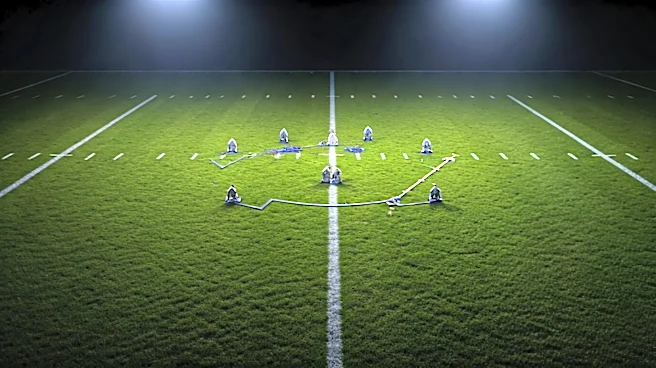
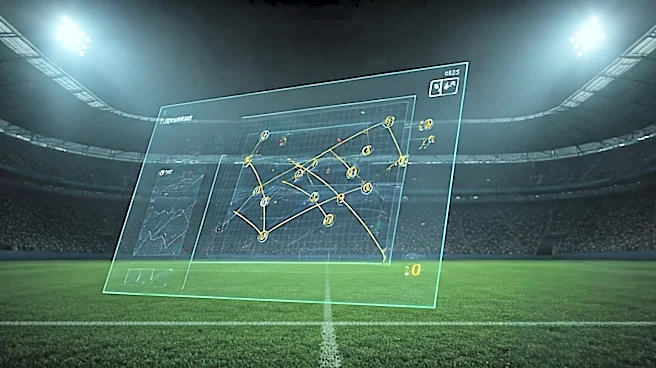
When the broadcast cuts to a wide, tactical view, resist the urge to find the ball. Instead, look at one team’s players as a single organism. Do you see two distinct lines of four players? That’s a classic 4-4-2 formation. Are they spread out or squeezed
tightly together? This is called 'compactness.' Elite teams move like a net through the water, shifting from side to side in unison to close down space without breaking their shape. A team that maintains its compact shape is incredibly difficult to play through. When you see a player drift out of position and leave a gap, you’re seeing a potential weakness that the opponent will try to exploit. The wide shot turns what looks like random running into a disciplined, geometric dance.
Understanding the Coordinated Press
To a new fan, 'pressing' looks like one defender simply chasing the guy with the ball. The wide shot reveals it’s a far more sophisticated and coordinated trap. When a team decides to press, it’s not a solo act. Watch for the 'trigger'—often a bad touch from an opponent or a pass to a less-skilled player near the sideline. Suddenly, it’s not one player running, but three or four, each moving to cut off a specific passing lane. They aren’t all trying to win the ball; they’re trying to force the player in possession into a panic, limiting their options to one or two bad passes. It’s the soccer equivalent of a full-court press in basketball, designed to create turnovers in dangerous areas. The wide angle shows you the whole trap closing, not just the final lunge for the ball.
The Genius of Off-the-Ball Running
The star with the ball at his feet is easy to admire. But the wide shot helps you appreciate the unsung heroes: the players making intelligent runs without the ball. A forward might make a hard diagonal run not to receive a pass, but to pull a key defender out of position, creating a huge gap for a teammate to run into. Think of it like a wide receiver running a deep route to pull the safety away, opening up the middle of the field for a tight end. These decoy runs are selfless, exhausting, and absolutely essential to breaking down a disciplined defense. From the wide view, you can see the cause and effect: one player’s sprint creates an ocean of space for another, leading to a goal that looked 'easy' on the close-up replay but was actually manufactured 30 yards away from the action.
The Power of Switching Play
Defenses are designed to be compact, to shrink the field and suffocate the attack. The most effective way to counteract this is the 'switch'—a long, sweeping pass from one side of the field to the other. On a standard broadcast, a long pass can seem hopeful or even aimless. But the wide shot shows the logic. You’ll see one team overload the left side of the field, drawing all the defenders over like moths to a flame. Then, a midfielder will hit a 50-yard diagonal ball to a winger who is suddenly all alone on the right side. The defense, which was just a tight, organized block, now has to sprint and scramble across the entire width of the field to recover. This creates chaos, fatigue, and one-on-one matchups that favor the attacking team. It’s the tactical equivalent of a strategic retreat and flank attack, all executed with a single kick of the ball.