






The Uniform as National Symbol
For any country, a national team jersey is a potent symbol. It’s the banner under which players compete and the uniform fans wear to signal their allegiance. It’s a visual shorthand for national identity, instantly recognizable from a stadium seat or a TV
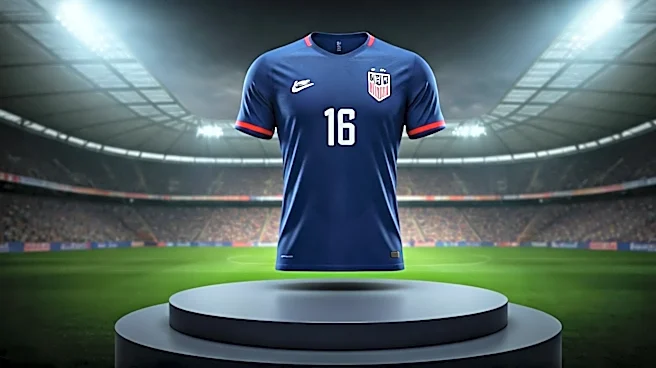
screen across the globe. When the USMNT takes the field, the jersey is the first thing we see—a rolling wave of red, white, and blue that says, “We are here.” But its importance goes beyond simple identification. It’s a wearable piece of history, linking the current squad to generations past and carrying the dreams of millions of fans. For a nation still carving out its definitive soccer identity, what that jersey looks like, and what it represents, carries enormous weight.
The Ghost of '94 and the Power of a Moment
To understand the potential of 2026, we have to look back to 1994, the last time the U.S. hosted a men’s World Cup. The team’s away kit was a masterpiece of glorious, unapologetic ‘90s design: a faux-denim print covered in floating, abstract stars. At the time, it was widely mocked as goofy and quintessentially “American” in the worst way. Decades later, it is revered. That “denim” kit is now a priceless artifact, a symbol of a pivotal moment when the U.S. reintroduced itself to the world’s game. It proved that a jersey, even a controversial one, can become a time capsule. It wasn’t just a uniform; it was the physical embodiment of an era of underdog spirit, big hair, and burgeoning soccer hope. The lesson is that a World Cup jersey isn’t just judged in the present; it’s destined to become a symbol of its time, for better or worse.
The Burden and Opportunity of a Host
Hosting the World Cup changes everything. The spotlight isn't just on the team's performance; it's on the entire country as a cultural host. The jersey becomes the lead marketing asset for the home team. It will be worn by celebrities, featured in commercials, and sold in every sporting goods store from coast to coast. There’s an inherent pressure to get it right. A bold, confident design can project an image of a nation ready for the moment. Think of France’s iconic 1998 kit, with its elegant horizontal stripes, worn by the host-nation champions. It became synonymous with victory and a multicultural French identity. A bland or poorly received design, however, can feel like a deflating opening act—a visual representation of a missed opportunity, as many fans felt about the USMNT's simple, almost generic kits for the 2022 World Cup.
A Statement About American Soccer
The 2026 jersey will be a statement of intent. Is American soccer still the scrappy underdog, or is it a confident, creative, and established power? The design choices will be scrutinized for answers. A classic, heritage-inspired design might suggest a program honoring its history. A bold, modern, or avant-garde kit could signal a desire to break from the past and forge a new, uniquely American soccer aesthetic. After years of debate about what the “U.S. style of play” should be, the jersey offers a chance to define a U.S. *style*. It’s a chance for U.S. Soccer and its long-time apparel partner, Nike, to craft a narrative. With a young, talented generation of players, the jersey they wear on home soil will help define their identity in the eyes of the world and, crucially, in the eyes of a domestic audience that will be more engaged than ever.