


A Franchise on Life Support
To understand why 'Halloween H20: 20 Years Later' was such a savvy move, you have to remember where the franchise was in 1998. After the one-off experiment of 'Halloween III: Season of the Witch', the series brought Michael Myers back for a trilogy of films
('Halloween 4', '5', and '6') that grew increasingly bizarre. These entries introduced Michael's niece, Jamie Lloyd, and eventually entangled the silent killer in the 'Curse of Thorn', a convoluted plot involving a druidic cult controlling him. By the time 'The Curse of Michael Myers' was released in 1995, both critical and fan reception was lukewarm, and its box office take was a mere $15.1 million. The story was a mess, and the once-terrifying simplicity of The Shape was gone. The franchise was creatively exhausted and commercially stagnant.
The Post-'Scream' Playbook
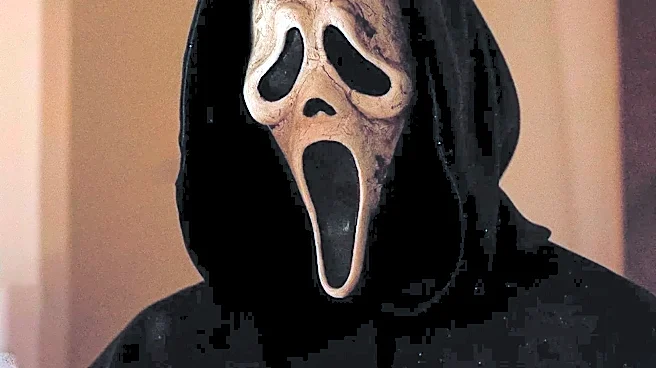
Then, in 1996, 'Scream' happened. Wes Craven's meta-slasher, penned by Kevin Williamson, didn't just revitalize the horror genre; it gave it a new, self-aware language. It was smart, stylish, and made a fortune. The studio behind it, Dimension Films, realized the potential for a new wave of horror, and they happened to hold the rights to 'Halloween'. Recognizing the need for a fresh start, the studio brought in Williamson—the hottest name in horror—to consult and write a treatment. 'H20' was deliberately crafted with the 'Scream' audience in mind. It featured a cast of hot young actors like Josh Hartnett and Michelle Williams, witty dialogue, and a polished, slick aesthetic that felt worlds away from the gritty, low-budget originals. The film even features a scene where characters watch 'Scream 2', a direct nod to the film that made its own existence possible.
The Return of the Queen
The single most important decision, however, was bringing back Jamie Lee Curtis as Laurie Strode. Curtis hadn't appeared in the series since 1981's 'Halloween II'. Her return wasn't just a marketing gimmick; it was the film's entire emotional core. This was the original 'final girl', now a woman haunted by her past, living under an assumed name as the headmistress of a private school. Curtis herself was instrumental in developing the story, wanting to explore the long-term trauma of that night in 1978. Her involvement gave the film instant credibility and a powerful narrative hook: the definitive survivor was back for a final confrontation. It recentered the franchise on its most compelling relationship—the hunter and his one true target.
Pruning the Family Tree
To make Laurie's return possible, the filmmakers made a bold choice that is now commonplace: they retconned the timeline. 'H20' explicitly ignores the events of 'Halloween 4', '5', and '6'. In this new reality, Laurie Strode never had a daughter named Jamie Lloyd who was killed off-screen. Instead, she faked her death and had a son, John (Josh Hartnett). This surgical strike on continuity wiped the slate clean. It jettisoned the confusing Thorn storyline and the entire Jamie Lloyd saga, which would have made Laurie a deeply unsympathetic character for abandoning her child. By positioning itself as a direct sequel to 'Halloween II', 'H20' streamlined the mythology and gave audiences an easy entry point, whether they were longtime fans or newcomers drawn in by the 'Scream'-era hype.
A Box Office Scream
The strategy worked perfectly. Made on a modest $17 million budget, 'Halloween H20' grossed $55 million domestically and $75 million worldwide. It was the highest-grossing film in the franchise up to that point, proving that there was still significant audience appetite for Michael Myers when presented correctly. The film was a tight, effective thriller that delivered a genuinely cathartic ending, with Laurie finally, seemingly, killing her tormentor. Its success validated the 'legacyquel' approach decades before it became a dominant Hollywood trend. 'H20' provided a blueprint: honor the original, bring back a beloved star, simplify the lore, and tailor it for a new generation. It not only saved Michael Myers from the brink of irrelevance but repositioned 'Halloween' as a prestige horror property worthy of big-screen events.