








1. Watch the Team's Shape Without the Ball
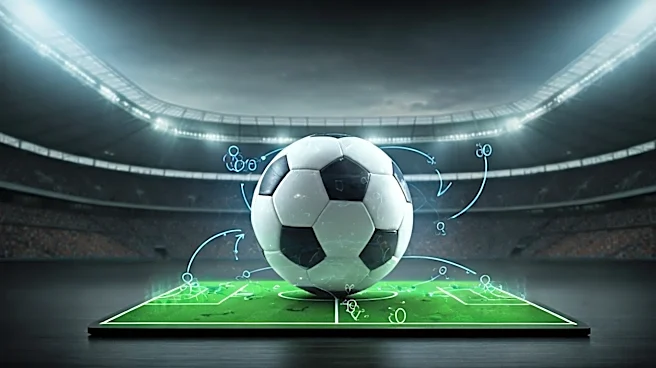
Next time a team loses possession, ignore the ball for five seconds. Instead, watch how their players scurry back into a specific formation. This is their defensive shape. Are they forming two tight, flat lines of four players (a 4-4-2)? Are they packing
the middle of the field, creating a fortress in front of their goal? This shape is the foundation of a team’s strategy. A compact shape that moves together side-to-side is hard to break down. A disorganized one, with big gaps between players, is a defense just waiting to be carved open. Seeing how quickly a team gets into its shape—and how disciplined they are in holding it—tells you if they’re a well-coached unit or a chaotic mess.
2. Spot the Pressing 'Trigger'
You’ve seen it: a defender gets the ball, and suddenly three attackers swarm him like bees. That wasn't random. It was a coordinated press, and it started with a “trigger.” A trigger is a pre-planned cue for the team to apply intense pressure. Common triggers include a bad touch from an opponent, a slow pass back to the goalkeeper, or a player receiving the ball near the sideline, where they have fewer options to turn. Watch for that moment of hesitation or weakness from the team with the ball, and then see if the defending team uses it as a signal to hunt in a pack. This is the chess match within the game—luring the opponent into a trap and then pouncing to win the ball in a dangerous area.
3. Find the 'Third-Man' Run
This concept is the secret key to unlocking stubborn defenses and sounds more complex than it is. Here’s the simple version: Player A passes to Player B. Instead of Player B just passing back or trying to beat his man, a *third* player, Player C, makes a forward run into the space behind the defense. Player B then plays a quick, one-touch pass into that space for Player C to run onto. It’s a simple triangle, but it’s devastatingly effective. When you watch a great team like Manchester City or the Spanish national team, don't just watch the pass. Watch for the *next* player who starts running *before* the pass is even made. That’s the third-man run, and it’s a sign of a team with incredible chemistry and intelligence.
4. Look for Players 'Between the Lines'
Imagine the opponent's defense and midfield are two distinct horizontal lines on the field. The most dangerous attacking space is the pocket of green grass *between* those two lines. Great attacking midfielders and forwards don’t just run in straight lines; they drift into this zone. When a player receives the ball here, it causes chaos. The defenders don’t know whether to step up and leave space behind them, and the midfielders don’t know whether to drop back and get disorganized. Watch for star players like Lionel Messi or Kevin De Bruyne. They are masters of finding this little pocket of space, receiving the ball on the turn, and instantly putting the defense in a panic.
5. Notice the Overlapping Full-Backs
In modern soccer, the defenders who play on the far left and right (the full-backs) are often secret weapons. When their team has the ball, watch the winger on their side. Often, the winger will cut inside, dragging their defender with them. This creates a huge, empty lane on the outside of the field. Who fills it? The full-back, who sprints forward from their defensive position on an “overlapping” run. This gives the team an extra attacker and creates a 2-vs-1 situation against the opposing full-back. It’s a classic, effective move that generates countless scoring chances from crosses. Seeing this pattern unfold shows you how teams use movement to create numerical advantages all over the pitch.