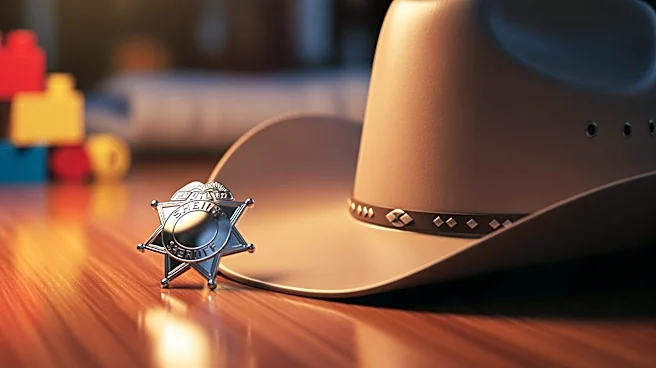






The Opening Statement: Property of Andy
For an entire generation, the first Toy Story wasn't just a film; it was a seismic event. Released in 1995, it wasn't only the dawn of feature-length CGI animation but a story that perfectly captured the sacred, imaginative world of a child's bedroom.
We weren't just watching Woody and Buzz; we were watching our own stuffed animals and action figures come to life. The original film established an emotional contract with its audience, primarily Millennials. These weren't just Pixar's characters; in a way, they felt like ours. We were Andy. His name was on the bottom of their boots, but our emotional investment was written all over the franchise.
Exhibit A: The 'Perfect' Trilogy
This sense of personal ownership was compounded by the masterful handling of the first two sequels. Toy Story 2 deepened the lore and emotional stakes, but Toy Story 3 delivered what many considered a perfect closing argument. Released in 2010, its audience had grown up. Andy was going to college, and we were facing our own goodbyes to childhood. The film's final moments—Andy passing his beloved toys to Bonnie, giving each one a final, heartfelt send-off—wasn't just an ending. It was a catharsis. It was the cinematic equivalent of a perfectly executed legal settlement that satisfied all parties. The case felt closed. The verdict was in: a flawless trilogy that honored the journey from childhood to adulthood.
The Cross-Examination of Toy Story 4
Then came the announcement of Toy Story 4. For many, this felt like appealing a verdict that everyone had already agreed upon. The primary objection wasn't necessarily that the film would be bad, but that it was *unnecessary*. It threatened to add a messy, unwanted epilogue to a story that had concluded with grace and finality. When the film was released, the fan court went into overdrive. Every plot point was scrutinized like evidence. Did Woody's decision to leave Bonnie and the gang for a new life with Bo Peep honor his established character arc of loyalty, or did it betray it? Was Forky a brilliant meta-commentary on the nature of toys, or a sign that the ideas were running out? The debates were fierce because they weren't just about story logic. They were about whether this new piece of evidence strengthened or weakened the legacy of the original case.
The Verdict on Lightyear: A Mistrial
If Toy Story 4 was a contentious appeal, Lightyear was a completely different trial that ended in a hung jury. The film attempted to expand the universe by telling the story *behind* the toy. The problem, as the box office and lukewarm reception demonstrated, is that fans' loyalty was never to the abstract concept of the 'Buzz Lightyear' IP. It was to a specific, neurotic, plastic space ranger voiced by Tim Allen who was best friends with a pull-string cowboy. The film's relative failure served as crucial precedent: it proved that the magic isn't in the brand, but in the specific, decades-long emotional narrative of *these particular toys*. The court of fan opinion ruled that you can't just slap a familiar name on a new product and expect the same investment.
Awaiting a Ruling on Toy Story 5
And so, here we are, with Toy Story 5 officially on the docket. The cycle begins anew. Immediately, the prosecution (skeptical fans) is asking the same questions. What possible story is left to tell? Can it justify reopening a case that has been litigated for nearly 30 years? Will it honor the emotional verdicts of the previous films? The defense (Pixar and Disney) will have to present a compelling case to an audience that has become seasoned, expert legal analysts of its own nostalgia. They aren't just consumers anymore; they are the self-appointed guardians of a sacred text, and they will cross-examine every frame for its legitimacy.