






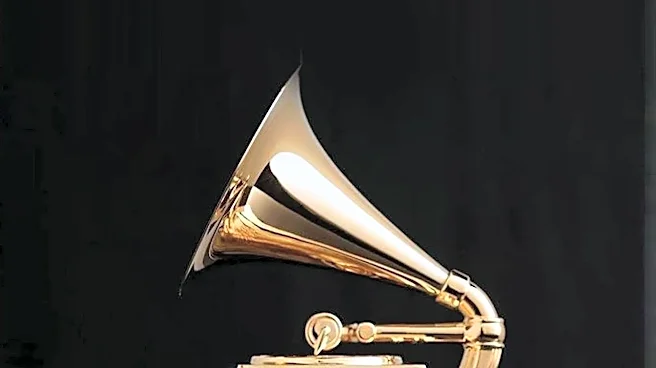

Brazilian music is a global force, yet its artists are often missing from the Latin Grammys’ top categories. The reason isn't a lack of talent, but a set of complex rules, including a key language percentage, that shape the entire competition.
Decoding the Magic Number
The headline
says 60%, and for the 2026 awards, that's exactly right. According to updated guidelines from the Latin Recording Academy, for a recording to be eligible in most categories, it must contain at least 60% of its lyrics in Spanish or Portuguese. This is a recent change from the previous 51% threshold, making the language component more critical than ever. While Portuguese is explicitly included, this rule creates an inherent challenge. The Latin music market, and therefore the Academy's voting body, is overwhelmingly dominated by Spanish speakers. This means a purely Portuguese song is eligible for Record of the Year, but it competes against a massive wave of Spanish-language hits for the attention and votes of the Academy's members. It's like being invited to the party but having to shout to be heard over a much louder crowd.
The 'Golden Cages' of Genre Fields
The Academy does celebrate Brazilian music with a dedicated set of categories in the Portuguese Language Field. This is where artists can win awards like 'Best Portuguese Language Contemporary Pop Album'. While these are prestigious honors, critics argue they can also function as 'golden cages'. By creating a separate space for Portuguese-language music, the system can inadvertently silo Brazilian artists, keeping them from competing in the major, career-defining General Field categories: Record of the Year, Album of the Year, Song of the Year, and Best New Artist. Winning in the Portuguese field is a huge achievement, but it rarely generates the same international headlines or crossover momentum as a win in a general category.
Anitta's Playbook: The Crossover Strategy
No artist has navigated this complex system more publicly or skillfully than Anitta. The Brazilian superstar has built a global career by treating language as a strategic tool. She releases music in Portuguese for her massive fanbase at home, but she also records and releases hits in Spanish and English specifically to compete on the international stage. Her Spanish-language track 'Envolver' earned her Record of the Year nominations at past Latin Grammys, a feat that would have been nearly impossible with a purely Portuguese song. Anitta’s career demonstrates that the most direct path to the main stage is to play the game by its rules, even if you’re also working to change them from the inside. She has been vocal about the linguistic and cultural divides, but she uses her multilingualism to bridge them.
The Path to the Main Stage
So what does a Portuguese-language song need to break through at the 2026 Latin Grammys? The 60% rule makes it clear that language is just the first hurdle. The real challenge is capturing the votes of a diverse, Spanish-speaking majority. The most viable strategies involve a multi-pronged approach. First, strategic collaborations are key; featuring a major Spanish-language star on a track is a proven way to cross the language divide. Second is the 'Anitta' model: releasing a Spanish version of a Portuguese hit to make it palatable and accessible to the wider voting body. Third is a push for more sonic fusion, blending distinctly Brazilian rhythms with mainstream pop and reggaeton sounds that already dominate the Latin charts. Finally, there's the long game: encouraging more Brazilian music professionals to become voting members of the Academy to build influence from within. The goal isn't just to be eligible; it's to be undeniable.