





A Stage with a Political Past
You can’t understand Venice without knowing its origin story. Founded in 1932, the festival was championed by Count Giuseppe Volpi, a key figure in Benito Mussolini’s fascist government. Its top prize was even called the "Coppa Mussolini." After World
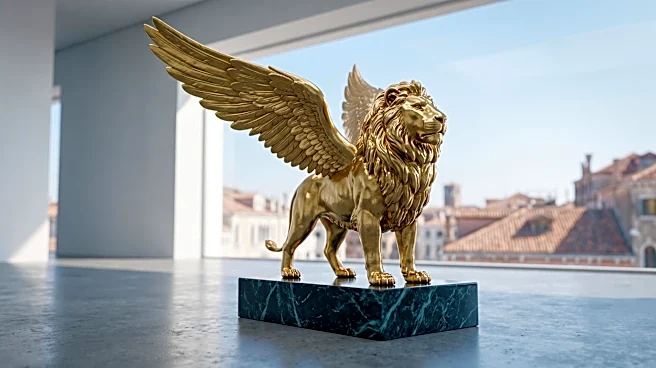
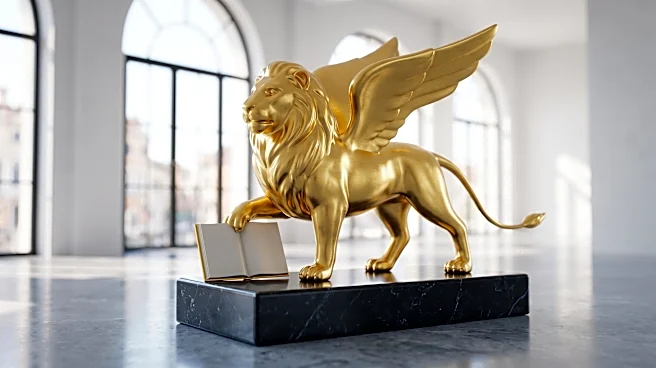
War II, the festival consciously worked to shed its political baggage and redefine itself as a haven for artistic freedom, introducing the Golden Lion award in 1949 as a symbol of this rebirth. But that history never fully disappears. This decades-long journey from a tool of state propaganda to a celebrated bastion of auteur cinema created a unique tension. Unlike festivals born with purely artistic or commercial aims, Venice has a legacy of grappling with political power, and that DNA informs the provocative and often oppositional films it champions today.
The Perfect Oscar Launchpad
Timing is everything. Venice’s late August/early September slot makes it the unofficial starting gun for the Academy Awards season. A film that makes a huge splash here—whether through critical praise or controversy—gets a massive head start in the long race to the Oscars. This platform is particularly crucial for documentaries and international films that might otherwise struggle for attention. When Laura Poitras’ “All the Beauty and the Bloodshed,” a documentary about activist Nan Goldin’s fight against the Sackler family, won the Golden Lion in 2022, it was a seismic event. It signaled that a tough, political documentary could be a major awards player, turning a film into a global conversation. Directors with a strong political message know that a Venice premiere guarantees the world’s media is watching, ready to amplify their cause far beyond the film itself.
A Magnet for Fearless Auteurs
Venice has long cultivated a reputation as a festival for serious, uncompromising directors. While Cannes balances glamour and art, Venice often leans into the latter, attracting filmmakers who tackle difficult subjects head-on. The 2026 festival, for instance, is slated to feature films about Rupert Murdoch’s rise, Russian journalists in exile, and the Israeli-Palestinian conflict. In previous years, films about the Gaza conflict and other geopolitical crises have been central to the lineup. This curatorial fearlessness means Venice actively selects films that are destined to be divisive. By providing a platform for directors like Alex Gibney (“Musk”) or Danny Boyle (“Ink”), the festival all but guarantees that the discourse will be as much about real-world events as it is about cinematic achievement.
When Art Collides with the News Cycle
Often, films arrive on the Lido at the exact moment their subject matter is exploding in the global news cycle. This creates a perfect storm where a movie premiere becomes a real-time referendum on a current event. The 2025 festival saw a film about the death of a young girl in Gaza receive a record-breaking standing ovation, with protests and political statements dominating the red carpet. Similarly, the 2026 edition is grappling with activist demands regarding films tied to the Israeli-Palestinian conflict and the inclusion of a feature made entirely with AI, another hot-button issue. This convergence of art and current events transforms film critics into political commentators and actors into activists, ensuring the festival’s impact is measured in headlines, not just star ratings.