







More Than Just a Victory Lap
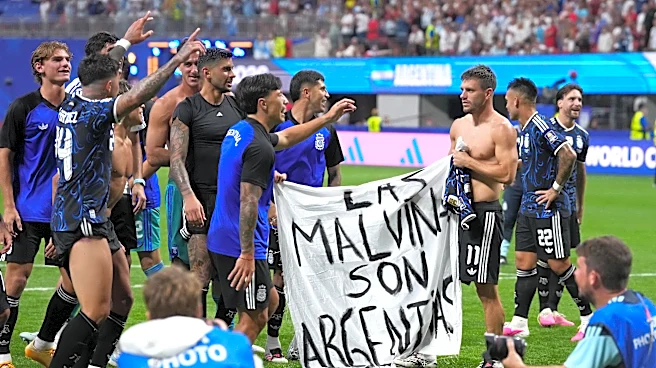
When a team wins a major cup, the celebration that follows isn't just about cheering and spraying champagne. Very often, it culminates in a full-throated chorus, a moment where exhausted players, coaches, and tens of thousands of fans join together to sing
one song. This isn’t a spontaneous karaoke session; it’s the final act of a long, emotional drama. The song serves as a communal release, a way to channel the joy, relief, and tribal pride of victory into a single, unified expression. It’s a tradition that transforms a stadium from a venue of competition into a cathedral of shared identity, where the anthem is the hymn.
The Anthems and Their Origins
Many of these songs were not written for football. Liverpool's iconic "You'll Never Walk Alone" originated in the 1945 Rodgers and Hammerstein musical 'Carousel'. Adopted by the club in the 1960s after a cover by local band Gerry and the Pacemakers became a hit, its themes of solidarity through hardship resonated deeply. The song took on even greater significance after the Hillsborough disaster in 1989, becoming an anthem of remembrance and resilience for the city. More recently, Neil Diamond’s 1969 hit "Sweet Caroline" became an unofficial anthem for England's national teams. Its adoption was somewhat accidental, sparked by a Wembley DJ's gut decision to play it after a win during Euro 2020. The simple, feel-good chorus was infectious, and it quickly became a staple, uniting fans in a moment of pure, uncomplicated joy. Other clubs have their own deep-rooted anthems, like West Ham's "I'm Forever Blowing Bubbles," which dates back to the 1920s, or Manchester City's adoption of the classic ballad "Blue Moon."
The Power of a Shared Voice
So why a song? Psychologically, singing in a large group is a powerful bonding experience. It fosters a sense of unity and collective identity that few other activities can match. The simple, repetitive, and emotionally resonant lyrics of these anthems make them easy for tens of thousands of people to sing in unison. This act of singing together can create what sociologists call "collective effervescence"—a feeling of shared euphoria and connection. For players, it's a way to directly connect with the fans who have supported them all season. For fans, it's a way to feel like they are part of the victory itself. The physical act of singing—deep breaths, loud projection, synchronized rhythm—is cathartic, releasing the pent-up tension of a high-stakes match.
From Club Stands to National Pride
This tradition extends from club rivalries to the international stage, where songs can take on a patriotic dimension. During tournaments like the World Cup, pop songs can become unofficial national anthems. Before England adopted "Sweet Caroline," the song "Three Lions (Football's Coming Home)" defined the national mood for decades, a blend of hope and historical heartbreak that every fan understood. Recently, Oasis's "Wonderwall" has been embraced by the England team and its fans during the 2026 World Cup. Each participating nation submits a list of potential post-game victory songs to FIFA, turning a pop hit into a temporary symbol of national triumph. These songs attach themselves to a specific moment, a successful run in a tournament, and become forever linked with that emotion in the collective memory of the fans.