





The Badge Has Already Been Passed
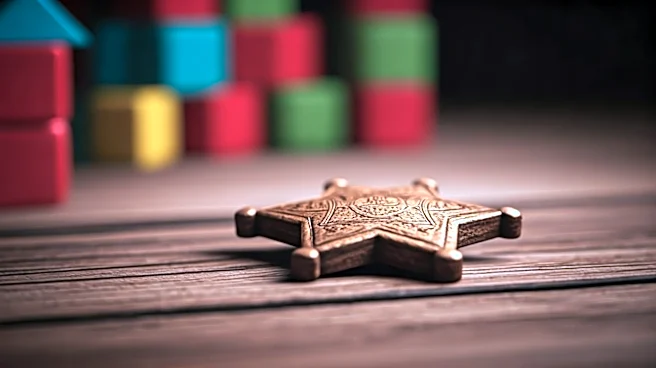
Let’s start with the facts on the ground. At the end of *Toy Story 4*, Woody makes the unprecedented choice to leave the group and start a new life. In his final moments with the gang, he doesn’t just say goodbye; he takes off his sheriff’s badge and pins
it on Jessie. This wasn’t a throwaway gesture. It was a literal passing of the torch, a narrative anointment. For four films, the gravitational center of the toys’ universe was Woody’s leadership and his singular devotion to his kid. With Woody gone, that center has shifted. The franchise has already told us who the new leader is. A fifth installment that doesn’t acknowledge Jessie’s new role as the de facto sheriff of Bonnie’s room would feel like a narrative cheat. Honoring this moment is the most logical and emotionally satisfying place for a new story to begin.
A Different, More Collaborative Leader
A Jessie-led story wouldn't just be 'Woody's arc, but with a cowgirl.' Her leadership style is fundamentally different, and that’s what makes it exciting. Woody’s defining trait was his loyalty to a single child, a characteristic that often created conflict and drove him to act alone. Jessie’s entire backstory, by contrast, is rooted in the trauma of being abandoned and forgotten. Her primary motivation isn’t singular devotion but collective security. She wants to keep the family together. A film centered on her would, by necessity, be more about the ensemble. Her conflicts would likely stem from trying to balance the needs of a diverse group of personalities—from Buzz and Slinky to the newer, more chaotic additions like Forky, Ducky, and Bunny. This immediately opens the door to richer B-plots and gives legacy characters more to do than just react to Woody’s latest crisis.
An Untapped Well of Emotional Depth
Since her powerhouse introduction in *Toy Story 2*, Jessie’s deep-seated fears and anxieties have largely been played for laughs or sidelined. We haven’t truly revisited the profound sadness of her backstory—the years spent in a dark box after her owner, Emily, grew up. That trauma is still part of her. Joan Cusack’s brilliant, high-energy vocal performance often masks a deep vulnerability that the franchise could, and should, explore further. What does it mean for a toy defined by a fear of abandonment to be the one responsible for holding everyone together? How does her past inform her decisions as a leader when faced with a new threat? There is a wealth of emotional territory here that feels fresh and specific to her character. It moves the franchise’s core themes of purpose and belonging forward through a new lens, one colored by resilience rather than nostalgia.
The Key to a True Ensemble
Ultimately, the headline’s claim hinges on this: focusing on Jessie is the best way to make *Toy Story 5* a true ensemble piece. The later films, for all their strengths, became increasingly 'The Woody Show.' Buzz was often relegated to a secondary, sometimes comically inept, role. The rest of the gang were basically a Greek chorus. By placing Jessie at the center, the story is forced to become more democratic. Her relationship with Buzz can finally evolve beyond the Spanish-mode gag into a true leadership partnership. Characters like Dolly, who was already positioned as an intelligent strategist in *Toy Story 3*, can become a key advisor. A Jessie-centric plot allows for pairings and interactions that we haven't seen before, reinvigorating the world and reminding us why we fell in love with this entire toy box, not just its cowboy.