



The Mirror of Fear
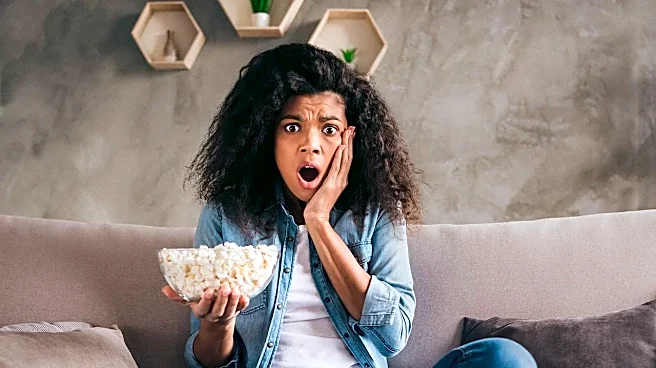
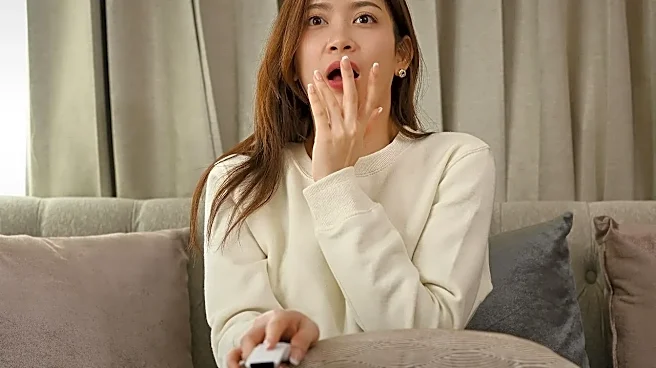
We are hardwired to read faces. From birth, we learn to interpret joy, sadness, anger, and, most importantly, fear from the expressions of others. Horror directors exploit this fundamental part of our psychology. When a character's eyes widen in sheer
terror, their breath catches, and their face contorts in a mask of disbelief, our own brains can't help but mirror that emotion. We feel their fear on a visceral level because we are empathetic creatures. A close-up on a terrified face is more than just a filmmaking technique; it’s a direct line into our own primal anxieties. The actor becomes a surrogate for the audience, and their reaction gives us permission—and instruction—on how to feel. We see their panic, and our own heart rate starts to climb in response, a biological chain reaction that no rubber-suited monster can replicate on its own.
Outsourcing the Imagination
The oldest rule in horror is that what you don't see is more terrifying than what you do. A reaction shot is the ultimate engine for this principle. By focusing on the character’s response instead of the threat itself, the storyteller outsources the job of creating the monster to the most powerful art department in the world: the audience's imagination. When we see a character staring, horrified, into an unseen corner of a room, our minds race to fill in the blank with our own worst fears. Is it a ghost? A home intruder? A grotesque creature from another dimension? The answer is all of them and none of them. The monster becomes a personalized nightmare, tailor-made for each viewer. This technique turns the audience from a passive observer into an active participant in their own scaring. The story provides the spark, but we provide the fuel.
A Master Class in Terror
Modern television horror has perfected this art. Look no further than Mike Flanagan’s “The Haunting of Hill House.” The show is full of ghosts, but its most iconic and terrifying creation is the Bent-Neck Lady. For much of the series, we experience her horror through the terrified eyes of a young Nell Crain. We see Nell’s paralysis, her silent screams, her lifelong trauma, long before we understand the ghost's true nature. The eventual reveal—that Nell herself is the ghost, caught in a time loop of her own death—is a narrative gut punch, but the years of fear we witness are built almost entirely on the reaction. The horror isn’t just the apparition; it’s the tragedy of the person seeing it. It proves that the most effective scares are rooted in character and emotion, not just spectacle.
The Diminishing Returns of the Creature
Conversely, horror often loses its power the moment the monster steps fully into the light. The suspense that was so carefully built begins to deflate. We can see the seams in the costume, the pixels in the CGI. The abstract, boundless terror of the unknown solidifies into something tangible and, therefore, something that can be understood and defeated. Classics like “Jaws” and “Alien” understood this perfectly, hiding their creatures for most of their runtime and relying on the actors' performances to sell the threat. When a show puts all its chips on the monster design, it risks turning fear into a simple design critique. Is it cool-looking? Sure. But is it as scary as the unfiltered terror on a human face? Rarely. The reaction shot is a testament to the fact that, in horror, empathy will always be a more powerful tool than gore or spectacle.