







The Soccer Fan’s Blueprint
First, let’s get the basics out of the way for anyone who sticks to sports played on ice. In the world of soccer, a “4-3-3” is one of the most common and influential tactical formations. The numbers refer to the distribution of the ten outfield players:
four defenders, three midfielders, and three forwards. It’s a language of structure, balance, and intent. A coach choosing a 4-3-3 is making a clear statement about how their team will control space, transition from defense to attack, and press the opponent. It’s a system popularized by legendary Dutch teams in the 1970s and perfected by modern powerhouses like Barcelona and Liverpool. In soccer, these numbers represent order, philosophy, and the strategic chess match playing out across a massive field.
The Hockey Fan’s Translation: A Penalty
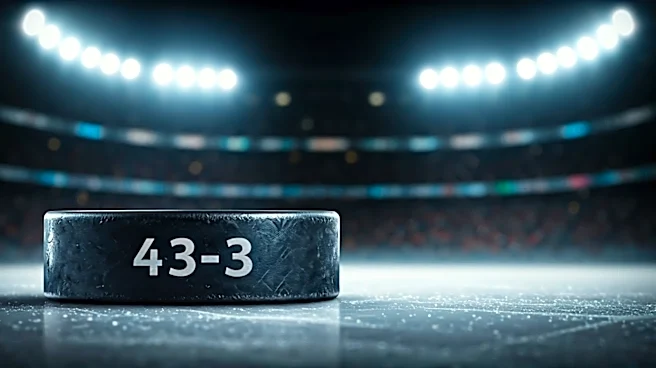
To a hockey fan, hearing “4-3-3” immediately short-circuits the brain. The first and most obvious translation is a simple, hilarious error: that’s ten skaters. In hockey, a team fields five skaters (and a goalie). Putting ten on the ice is a flagrant violation that results in a “too many men on the ice” penalty. It’s the kind of fundamental mistake that would get a youth coach fired. So, right off the bat, the phrase suggests a complete ignorance of the game’s most basic rule. Beyond the simple math, hockey fans just don’t talk that way. While coaches use tactical systems, they’re described differently. You might hear about a “1-2-2 forecheck” or the infamous “1-3-1 neutral zone trap,” which describe how players position themselves to pressure the puck in different zones. But the on-ice personnel is a constant: three forwards (a center and two wingers) and two defensemen. These units—the “forward line” and the “defensive pairing”—are the building blocks of a roster. The language of hockey is about lines, pairs, shifts, and zones, not an overarching numerical formation of all ten skaters on a soccer pitch.
A Tale of Two Tapes
The joke’s endurance comes from the cultural chasm between the two sports. Soccer is often called “the beautiful game” for its flowing, continuous nature, where strategy unfolds over vast green expanses. It’s about creating and denying space. Hockey is the opposite. It’s a game of controlled chaos in a confined space. It’s about speed, collisions, and exploiting fleeting opportunities in a rink that feels like a pinball machine. The plexiglass walls ensure the puck (and sometimes the players) is always in play, creating a frantic, relentless pace. Where a soccer formation like 4-3-3 implies a certain elegant, geometric order, hockey embraces the scramble. The best-laid plans of a hockey coach can be obliterated by a weird bounce off the boards, a timely bodycheck, or a moment of individual brilliance. The sport’s DNA is rooted in grit, improvisation, and surviving high-pressure moments, not maintaining a pristine formation. The 4-3-3 feels too neat, too theoretical for a game played with sticks on frozen water.
The Punchline of Fandom
So, what does 4-3-3 really mean to a hockey fan? It means “I don’t get your sport.” It’s a gentle jab, a bit of online shorthand used to tease soccer fans who wander into hockey discussions. It’s the hockey equivalent of asking a baseball fan why the pitcher doesn’t just run the bases after he throws the ball. It’s a low-stakes, self-aware joke that reinforces a sense of community. When a hockey fan sees another fan deploy the “4-3-3” line, there’s a moment of shared understanding: we know our weird, violent, fast-paced sport is different, and we love it for that. It has become a classic meme in hockey circles, a perfect, concise way to poke fun at the perceived pretension or foreignness of soccer tactics. It’s a digital eye-roll that says, “We don’t do that here.” It’s not malicious; it’s a form of sports tribalism that’s more about celebrating one’s own unique culture than genuinely denigrating another.