







Concept: The Flat-Pack Philosophy
Your journey begins not with a hammer, but with a sketchpad and a crucial question: How does this break down? Before you fall in love with a grand vision, fall in love with a modular one. Think in terms of components that can nest inside each other, fold
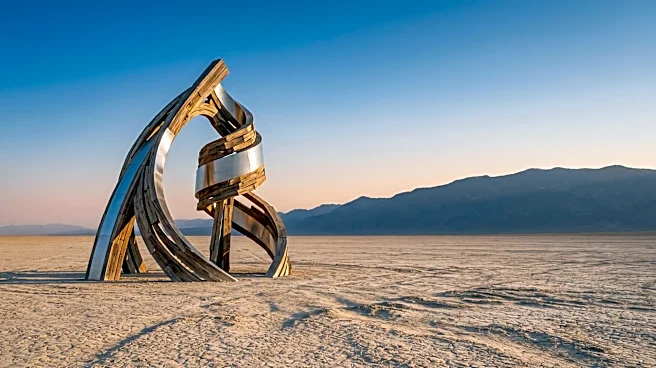
flat, or disassemble into manageable pieces. Your enemy is empty space. A giant, hollow sphere is a transportation nightmare, but a series of interlocking ribs that assemble into a sphere is a puzzle you can solve. Design for your vehicle. Measure your truck bed, van, or trailer, and make those dimensions the absolute limit for your largest single component. This constraint isn't a limitation; it’s a creative challenge that forces elegant, efficient design from the very beginning. The most successful large-scale playa props are conceived with disassembly as a core feature, not an afterthought.
Materials: Lightweight and Playa-Hardy
The Black Rock Desert is an environment of extremes—scorching sun, high winds, and fine, alkaline dust. Your material choices must respect these conditions. Foam, particularly expanded polystyrene (EPS), is a popular choice for its low weight and ease of carving, making it ideal for large sculptural forms. However, it needs a durable coating, like a hard resin or even fiberglass, to protect it from impacts and the elements. For structural elements, think beyond heavy steel. PVC pipes, electrical conduit, and lightweight plywood offer excellent strength-to-weight ratios. Plywood is often preferred over particle board, which can easily splinter and create cleanup challenges. Fabric is your friend for creating large surfaces without the weight. Spandex or other stretch fabrics can be tensioned over a lightweight frame to create walls, wings, or glowing surfaces when backlit with LEDs.
Assembly: Bolts, Not Brain Surgery
Once you’re on the playa, your workshop is a dusty patch of ground with relentless sun and potential wind gusts. Your assembly process should be as simple and foolproof as possible. Design connections that slot together intuitively. Use hardware that requires minimal tools—think wing nuts, clevis pins with clips, or bolts with captive nuts that don’t require a wrench on both sides. Label every single piece clearly. A simple system like “A1 connects to A2” with corresponding colored tape can save you hours of frustration. Practice your full assembly and disassembly at home at least once. This “dress rehearsal” will reveal any design flaws, missing hardware, or awkward steps in the process while you still have access to a hardware store and a comfortable workshop.
Logistics: The Art of the Pack-Out
Transporting your art to Black Rock City requires its own strategy. As you pack, create a system. Bundle structural poles together, place all hardware in a single, clearly labeled bin, and protect delicate surfaces with moving blankets or custom-built crates. If your project is immense, you may need to hire a trucking company, which must be registered with the event as an Outside Service Provider. But for most artists, it's about maximizing personal vehicle space. Remember that every vehicle entering the event needs a vehicle pass. The pack-out is just as important as the pack-in. When it’s time to leave, your deconstructed prop needs to fit back into your vehicle along with all your camping gear and, crucially, every bit of trash you generated.
Leave No Trace: Design for Disappearance
The most important principle at Burning Man is to leave the playa exactly as you found it. This philosophy must be baked into your prop’s design. Your construction process must be clean. If you must cut or drill on-site, do it over a large tarp to catch every single wood chip, sawdust particle, or metal shaving. These tiny bits of debris are called “Matter Out of Place,” or MOOP, and preventing their spread is a core civic responsibility. Secure your artwork against high winds with guy wires or ground anchors so that it doesn’t become a hazard or shed pieces in a storm. When you disassemble your art, you are responsible for cleaning your entire area, performing a line sweep to pick up any debris left by your crew or visitors. A truly great Burning Man prop doesn’t just look amazing for a week; it vanishes completely.