





The Shocking Collapse
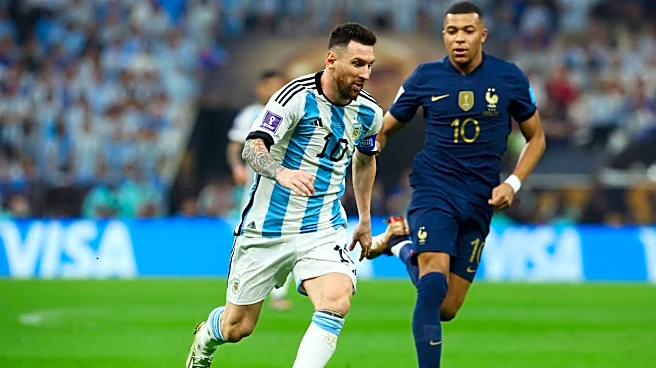
It wasn’t supposed to happen. Argentina, led by the legendary Lionel Messi in what he said would be his final World Cup, entered the 2022 tournament in Qatar on a 36-game unbeaten streak. They were co-favorites to lift the trophy. Their first opponent
was Saudi Arabia, a team given virtually no chance. The outcome felt preordained. And for a while, it was. Argentina went up 1-0 and had three more goals disallowed for offside calls in the first half. Then, in a dizzying five-minute span early in the second, Saudi Arabia scored twice. The final whistle blew on a 2-1 upset, one of the biggest in World Cup history. The dream was dead. The headlines wrote themselves: Messi’s last chance had evaporated in the desert heat, a national humiliation. The team looked broken, their historic run meaningless.
A Familiar Feeling of Doom
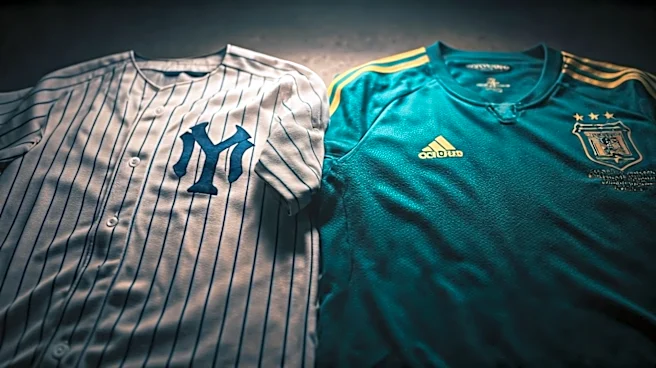
For American baseball fans, that specific flavor of public collapse and sudden, certain doom should ring a bell. Rewind to October 2004. The Boston Red Sox were facing their hated rivals, the New York Yankees, in the American League Championship Series. The Yankees were a dynasty; the Red Sox were defined by 86 years of championship futility, a drought known as the “Curse of the Bambino.” After three games, the series was 3-0 in favor of New York. In baseball, no team in history had ever come back from a 3-0 deficit to win a seven-game series. Game 3 had been a 19-8 bludgeoning at Fenway Park. It wasn't just a deficit; it was an embarrassment. The narrative was identical to Argentina’s: the dream was over, the team was cursed, and the only thing left was to play out the string of a historic failure.
The One Moment That Changes Everything
For every great comeback, there is a single moment where the impossible starts to feel possible. For Argentina, it came in their next match against Mexico, a game they had to win to survive. The contest was a tense, scoreless grind for over an hour. You could feel the weight of a nation’s expectations suffocating the team. Then, in the 64th minute, Messi found a sliver of space and ripped a low shot into the bottom corner of the net. It wasn't just a goal; it was an exhale. It was the moment the fear broke. Argentina won 2-0, and while the path ahead was still treacherous, they were no longer playing like a team expecting to lose. For the 2004 Red Sox, that moment came in the bottom of the ninth inning of Game 4, down 4-3 and three outs from elimination. A walk, followed by pinch-runner Dave Roberts’ stolen base—perhaps the most famous steal in baseball history—set the stage. Bill Mueller singled him home, tying the game. The Sox weren't saved yet, but they had survived. They had pushed back. The aura of Yankee invincibility had cracked, just a little.
Building Unstoppable Momentum
Once that first crack appears, belief can flood in. The Red Sox, of course, didn’t just tie Game 4; they won it in the 12th inning on a walk-off home run from David “Big Papi” Ortiz. Then Ortiz did it again, winning Game 5 with a walk-off single in the 14th inning. By the time the series shifted back to New York, the psychological tide had completely turned. The Red Sox were playing with house money, while the Yankees suddenly looked tight, mortal. Boston won Games 6 and 7 to complete the impossible comeback. Argentina’s journey followed a similar arc. After surviving the group stage, they played every knockout game like it was their last, because it was. They edged Australia, survived a wild penalty shootout against the Netherlands after conceding a last-second equalizer, and comfortably handled Croatia. By the time they reached the final against France, they were no longer the fragile team that lost to Saudi Arabia. They were a hardened, unified force playing for their captain’s legacy, culminating in arguably the greatest World Cup final ever played, which they won in another penalty shootout.
Why It's More Than Just a Game
What makes these stories timeless isn't just the win-loss column. It's the catharsis. The 2004 Red Sox didn’t just win a playoff series; they broke an 86-year curse, vanquished their nemesis, and went on to win their first World Series since 1918. It was a cultural exorcism for an entire region. For Argentina, the 2022 World Cup win wasn’t just a trophy; it was the final, unassailable piece of evidence in the argument for Lionel Messi as the greatest soccer player of all time. It was a victory that united a nation and delivered a storybook ending for a global icon. In both cases, the victory rewrote history and provided a generation of fans with an “I was there” moment defined by its sheer improbability.