








The Race Against the Clock
From the moment the referee blows the halftime whistle, an invisible timer starts. The 15-minute break isn't a leisurely pause; it’s a tightly choreographed operation. Players jog to the locker room, but the coaching staff often walks briskly, already
in deep conversation. The first two to three minutes are for the players. They grab water or a specific energy drink, get a quick once-over from the physios, and mentally decompress from the first 45 minutes of relentless action. For the coaching staff, this brief window is a final chance to huddle. An assistant who was watching from a high angle in the stadium might point out a recurring positional error, while another confirms an opponent's weakness they suspected before the match. Every second is allocated before the team is even fully assembled.
Data, Not Just Drama
While the head coach might be the face of the halftime talk, the most critical information often comes from a team of analysts. In a room nearby, these data gurus have spent the entire first half clipping key moments of the game. They aren't just looking for goals or mistakes; they’re identifying patterns. Is the opponent’s right-back venturing too far forward, leaving space behind? Are our midfielders too far apart, allowing easy passes through the center? By the time the coach addresses the team, analysts have 2-4 short video clips queued up on a tablet or a large screen. These clips provide indisputable evidence. Instead of saying, “We need to be better,” the coach can show a 10-second clip and say, “See this gap? We need our holding midfielder to drop into this exact space when their winger gets the ball.” It turns a vague feeling into a concrete, actionable instruction.
The Tactical Whiteboard Session
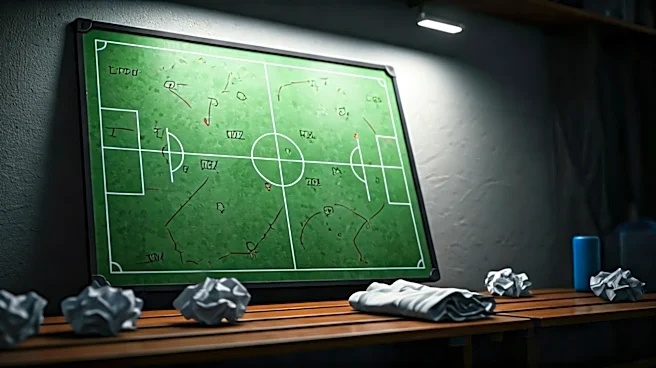
With the video evidence established, the coach moves to the whiteboard. This is where the core adjustments are made visual. It’s often less of a lecture and more of a focused workshop. The coach will use magnets or markers to represent players and illustrate the new plan. This is where you see the major shifts that can change a game. A team getting overrun in midfield might switch from a 4-4-2 formation to a 4-3-3, adding an extra body to the middle of the park. Or maybe the adjustment is more subtle: instead of pressing the opponent high up the field, the instruction is to drop back into a compact defensive block and spring counter-attacks. The coach will walk through 2-3 specific scenarios, pointing to the board and calling out players by name. “John, when their number 10 drifts wide, you go with him. Sarah, you then cover the space John just left.” The goal is clarity and repetition, ensuring everyone understands their revised role.
Player Feedback and Physical Reset
A great halftime isn't a one-way street. While the coach lays out the plan, they are also gathering intelligence from their leaders on the field. The captain, a veteran defender, or the central midfielder might be pulled aside. “What are you seeing out there? Is their striker stronger on his left foot? Do you feel like you have the energy to keep making those forward runs?” This feedback is vital; players on the pitch have a visceral understanding of the game’s flow that no analyst can fully capture. Simultaneously, the medical team is making its own crucial decisions. A player who took a hard knock might be getting assessed for a concussion or a muscle strain. This is when the coach finds out if a substitution is necessary not for tactical reasons, but for physical ones. A player might get a quick massage, change their cleats, or get re-hydrated, all while absorbing the new instructions.
The Final Motivational Push
Only in the last two or three minutes does the halftime feel anything like what we see in movies. Once the tactical adjustments are clear and medical checks are done, the coach’s job is to refocus the team’s mentality. If they’re winning, the message is about avoiding complacency and staying disciplined. If they’re losing, it’s about belief, reminding them of the game plan and the specific weaknesses they can now exploit. This isn’t a wild, rambling speech. It’s a sharp, concise message designed to instill confidence and clarity. The final words are often simple: “Execute the plan. Trust each other. Let’s go.” The players then head back to the tunnel, their minds recalibrated and their bodies reset, ready for a completely different 45 minutes.