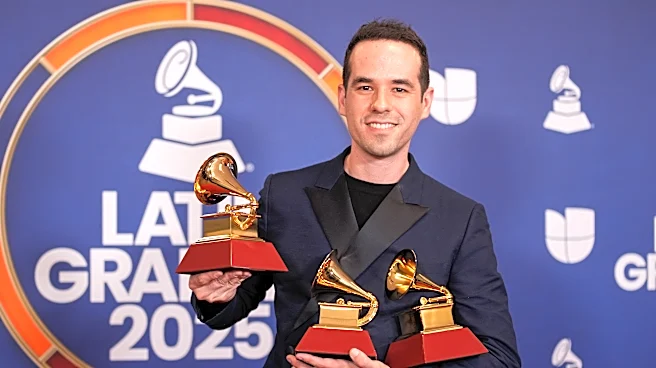

The Latin Grammys promise spectacle. But for its planned ranchera tribute, the biggest challenge isn't hitting the high notes—it's capturing the soul of a genre that thrives in closeness, not on a global
stage.
The Soul of the Cantina
To understand the challenge, you have to understand ranchera. This isn't just music; it's a feeling, a tradition born from the ranches and countryside of Mexico. At its core, ranchera is about raw, unfiltered emotion—tales of love, heartbreak, and patriotism sung with a passion designed to make you feel every word. Think of the iconic singers: José Alfredo Jiménez, Vicente Fernández, Chavela Vargas. Their power wasn't in pyrotechnics but in presence. A great ranchera performance is a conversation, an intimate confession shared between the singer and the listener. It lives in the subtle gesture, the cracking voice, and the cathartic 'grito'—a spirited yell from the singer or audience that punctuates a moment of peak emotion. This is music that was perfected in small plazas, family gatherings, and smoky cantinas, where the space between joy and sorrow is measured in feet, not camera angles.
The Rules of the Small Screen
Now, consider the modern awards show. A telecast like the Latin Grammys is a marvel of logistics, a tightly choreographed machine built for a global audience with a short attention span. Every performance is meticulously timed, often cut down to a three or four-minute medley to keep the show moving. The goal is to create a viral moment, a high-energy spectacle that looks great on millions of screens. The production values are immense, with dynamic lighting, complex staging, and an army of dancers. While this formula works wonders for pop, reggaeton, or rock, it fundamentally opposes the spirit of ranchera. The television camera demands constant visual stimulation, while ranchera demands emotional focus. The broadcast schedule requires brevity, while a classic ranchera song often needs time to build its story and emotional weight.
When Heartbreak Meets a Time Slot
Herein lies the clash. How do you translate the profound, personal sorrow of a José Alfredo Jiménez ballad—who is the subject of this year's tribute—into a four-minute slot between a pop mega-medley and a commercial break? How does the 'grito', an organic outburst of feeling, avoid sounding staged when it's scheduled after the second chorus? The risk is that the tribute becomes a museum piece rather than a living performance. By cleaning up the raw edges, polishing the sound, and focusing on spectacle, the broadcast can strip the music of its very essence, leaving a hollow echo of the real thing. It’s the difference between hearing a heartbreaking story from a friend and reading a brief summary of it in a newsletter. The facts are there, but the soul is missing. Past televised tributes have often struggled with this, cramming too many classics into a rushed medley that honors the songs in name only.
A Path to Authenticity
Despite the hurdles, a successful tribute is not impossible. The key lies in prioritizing authenticity over spectacle. The producers, led by Edgar Barrera, could opt for simpler, more direct staging that puts the focus squarely on the performers and the powerful lyrics. Instead of a rapidfire medley, dedicating the full time slot to a single, powerful rendition of one of Jiménez's masterpieces could allow the song's narrative and emotion to unfold properly. Selecting artists, like nominee Camila Fernández, who have a genuine connection to the genre is crucial. An authentic performance would trust the audience to connect with raw emotion, rather than assuming they need constant visual distraction. It means embracing the quiet moments as much as the soaring choruses, and understanding that the greatest special effect in ranchera music has always been a singer, a guitar, and a story that needs to be told.