


An All-American Invention
Before there was the dress, there was the event: the cocktail party. This after-work, pre-dinner gathering was a distinctly American innovation of the 1920s. As women gained more social and economic freedom after World War I, their lifestyles changed.
They needed a new kind of garment—something more elegant than a day dress but less formal and restrictive than a full-length evening gown. Early versions were often designed with American practicality in mind: a single, functional dress that could be adapted with accessories. This new dress code, born out of necessity and a changing society, allowed women to navigate the new social landscape with style and ease.
Dior Gives It a Name
While the concept was brewing for decades, it was French couturier Christian Dior who officially christened the garment in the late 1940s. Following the austerity of World War II, Dior introduced his famous "New Look" in 1947—a celebration of femininity with cinched waists, tight bodices, and full, calf-length skirts. This romantic silhouette became the universal template for formal dressing. Dior's use of the term "cocktail dress" was also a savvy marketing move that legitimized the garment and gave department stores a new category to sell, cementing its popularity with American women who eagerly adopted the chic, post-war uniform.
The Little Black Dress Connection
You can’t talk about the cocktail dress without mentioning its most famous incarnation: the Little Black Dress (LBD). While Coco Chanel had introduced the concept in the 1920s, the 1950s and '60s saw the LBD become the ultimate cocktail attire. Its genius lies in its versatility. It can be dressed up with pearls and heels for a formal event or worn more simply for a casual gathering. The LBD embodied the democratic spirit of American fashion—a stylish, reliable, and accessible option for women of all backgrounds. It became the default answer to the question of what to wear when an invitation specified "cocktail attire."
Rebellion and Reinvention
The cocktail dress faced its first major challenge in the late 1960s and 1970s. As social norms relaxed and fashion swung toward the counter-culture, the structured elegance of the cocktail dress seemed stuffy to a younger generation. Women began opting for more casual or expressive attire, like jumpsuits and palazzo pants, for evening events. However, the dress made a powerful comeback in the 1980s, aligning with the era's "power dressing" ethos. It was reinterpreted with sharper shoulders and sleeker lines, becoming a symbol of female success in the corporate and social worlds.
The Modern Cocktail Code
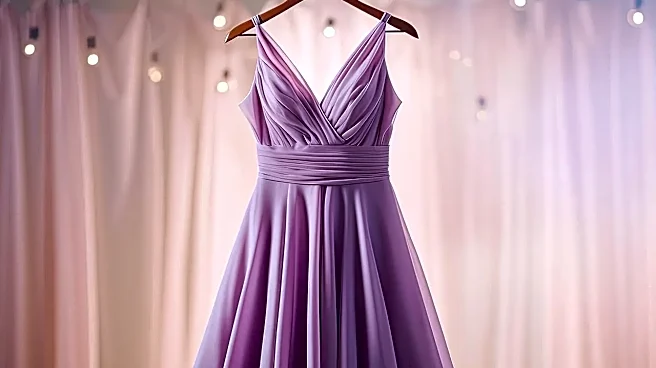
Today, the cocktail dress is arguably more relevant than ever because the dress code itself has become more flexible. It's the perfect solution for a wide range of semi-formal events, from weddings to work functions, where a full-length gown would be too much and casual wear too little. Defined generally as a knee-length or midi-dress, it can be a sleek sheath, a classic A-line, or a more modern flowing silhouette. Its enduring appeal lies in its balance of elegance and comfort, polish and ease. It isn't the loudest item in a wardrobe, but its presence signifies a certain fluency in the unspoken rules of American social life.