



More Than Just Curls
In the 2016 animated classic, Moana's hair isn't just a design choice; it's a part of her performance. It billows in the wind, gets soaked by the ocean, and has a life of its own that mirrors her untamable spirit. Animators famously developed new technology,
nicknamed Quicksilver, specifically to give her long, curly hair a dynamic and believable quality that could interact with the elements. They wanted to capture the same expressive freedom that 2D characters like Ariel or Pocahontas had, where hair becomes an extension of personality. The result was hair that didn't just sit there but acted as a storytelling device, reflecting Moana’s connection to the wind and sea. It was so integral that it was treated as its own character, with animators spending immense resources to get its physics and interactions just right.
The Live-Action Physics Problem
Translating that animated magic into live-action is a monumental task. Animation allows for a kind of “character physics” where movement serves the story, not reality. In the real world, and in the hyper-realistic CGI that live-action demands, hair is supposed to follow the laws of physics. The problem is that what looks right in animation can look bizarre or fake when rendered realistically. The creative team behind the new film has to decide: Do they create hair that behaves with perfect realism, potentially losing the expressive quality of the original? Or do they aim for a stylized look that honors the animation but risks falling into the “uncanny valley” of CGI, where it looks distractingly artificial? This dilemma is already playing out with the character of Maui, where discussions were had about whether his signature long hair should be a physical wig or entirely CGI to maintain its animated integrity.
A Thorny Technical Challenge
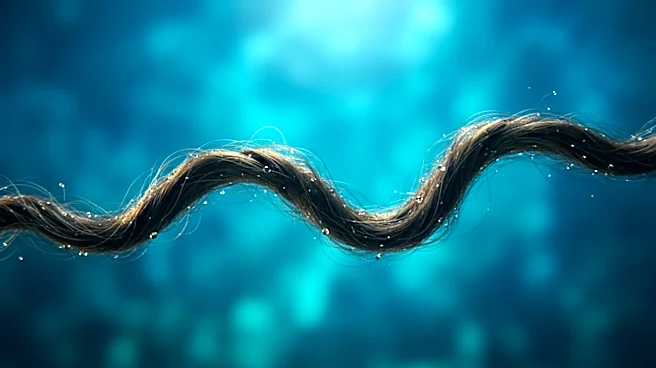
The technical side of rendering wet, curly hair that interacts with wind, water, and an actor's movements is a filmmaker's nightmare. For the animated movie, Disney artists dunked models' heads in water to study the effect, but replicating that with CGI in a live-action setting is another level of difficulty. Some film industry professionals argue that maintaining continuity with naturally curly hair from shot to shot, especially in wet and windy conditions, is incredibly difficult. One argument for styling the actress's hair in the live-action trailer with a more defined, uniform wave pattern is rooted in production continuity and the challenges of CGI. Some hair stylists have noted that computer-generated effects don't always adapt well to the beautiful unpredictability of textured hair, which can lead to a less believable on-screen result. However, this explanation has been met with skepticism from fans, who point to the ever-advancing state of visual effects.
The Cultural Weight of Getting It Right
This isn't just a technical conversation; it's a cultural one. For many Polynesian communities, hair carries deep significance, often seen as a connection to spiritual power, or mana, and ancestral heritage. Long hair can symbolize strength and femininity. For many fans, Moana's naturally voluminous, curly hair was a powerful moment of representation. She was a Disney heroine whose appearance broke from a long line of princesses with straight or loosely waved hair, offering a reflection for countless girls with textured hair. When early footage appeared to show the actress, Catherine Laga'aia—who has naturally curly hair—with a straighter, more uniform style, the reaction was swift. For many viewers, altering the hair wasn't just a style choice; it felt like erasing a key part of the character's identity and a step back for representation. It sends a message, intended or not, about which hair textures are considered acceptable for the big screen.