






From Practical Effect to Artistic Choice
For decades, stop-motion was a solution, not a statement. When Ray Harryhausen brought mythical creatures to life in films like Jason and the Argonauts, he was using the most advanced tool available to create the impossible. It was a visual effect born
of necessity, a way to put a Hydra on screen when no other method existed. The goal was realism, however fantastical. In hindsight, we see these creations as charmingly imperfect, but at the time, they were the peak of movie magic. The arrival of computer-generated imagery in the late 20th century could have, and perhaps should have, made stop-motion obsolete. Why spend months moving a puppet one millimeter at a time when a computer could render a smoother, more 'realistic' monster in a fraction of the time? But instead of disappearing, stop-motion found a new purpose.
The Allure of the Imperfect
The very 'flaws' of stop-motion became its greatest strength. As CGI became more ubiquitous and polished, audiences and filmmakers began to appreciate the handmade quality of its predecessor. The subtle boil of a puppet’s fur, the almost imperceptible fingerprint on a clay model—these were not mistakes, but proof of a human touch. This tactile nature sets it apart. Films like Tim Burton’s The Nightmare Before Christmas leaned into this aesthetic, creating a world that was intentionally stylized and textured. The herky-jerky movement of Jack Skellington isn't a limitation; it’s an essential part of his character and the gothic, handcrafted world he inhabits. The medium was no longer just a way to create a creature, but a way to create a feeling—a specific, tangible mood that slick digital animation couldn't replicate.
A World Under Absolute Control
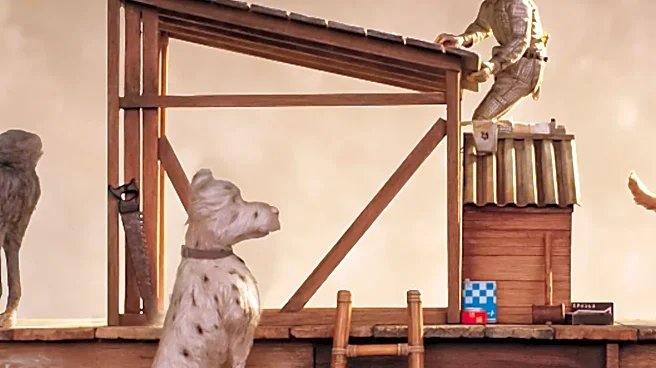
For an auteur director, stop-motion offers an unparalleled level of control. Every single element on screen, from a character’s glance to the rustle of a miniature newspaper, is the result of a deliberate decision. Wes Anderson, for example, uses the medium to construct his famously symmetrical and meticulously detailed worlds. In Fantastic Mr. Fox and Isle of Dogs, the animation style perfectly complements his deadpan humor and diorama-like compositions. The slightly stiff, puppet-like quality of the characters feels right at home in Anderson's universe, arguably more so than human actors might. He avoids techniques that hide the medium's nature, often intentionally leaving in the 'chatter' of the fur, reminding the audience that they are watching a painstaking, handmade creation. It's the ultimate expression of a singular artistic vision, built frame by meticulous frame.
Telling Stories for Grown-Ups
Perhaps the most significant evolution is how stop-motion has become a powerful vehicle for adult-oriented, thematically complex stories. Its inherent strangeness can mirror themes of alienation, loneliness, and mortality in ways that feel more profound than other mediums. Charlie Kaufman and Duke Johnson's Anomalisa uses puppets to tell a deeply human story about a man's inability to connect with others, a concept made literal by the identical puppets surrounding the protagonist. Similarly, Guillermo del Toro's Pinocchio isn't a fairytale but a dark meditation on life, death, and fascism, set in 1930s Italy. Del Toro chose the medium specifically because, as he put it, “animation is a medium, not a genre.” By using this handcrafted technique to explore mature themes, these directors challenge the notion that animation is just for kids and use its unique texture to add layers of meaning.