





USA vs. Mexico: The Backyard Brawl
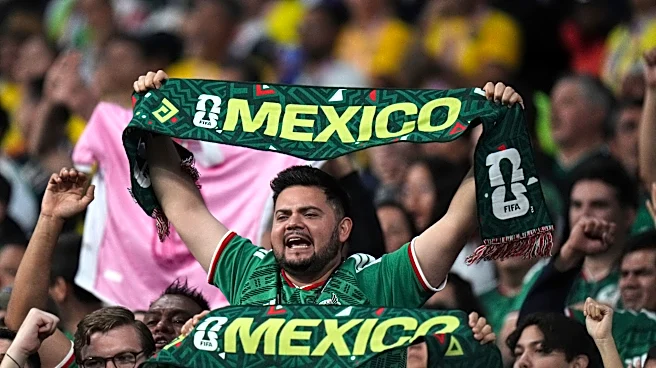
This is the one that matters most to American fans. For decades, it wasn't much of a rivalry, as Mexico dominated the U.S. from the 1930s through the 1980s. But since the turn of the century, the series has become intensely competitive. This isn't just
about geography; it's about identity, regional bragging rights, and a constant battle for supremacy in North America. The rivalry even has its own signature scoreline: "Dos a Cero" (2-0), a chant U.S. fans adopted after a string of key 2-0 victories over their rivals, most famously in the Round of 16 at the 2002 World Cup. That game, played on the neutral ground of South Korea, announced that the U.S. had finally arrived as a legitimate threat to Mexico's regional dominance. These matches are often chippy, passionate, and played in electric atmospheres, whether in Mexico City's daunting Estadio Azteca or on U.S. soil where the crowd is often split.
Argentina vs. Brazil: The Super-Feud
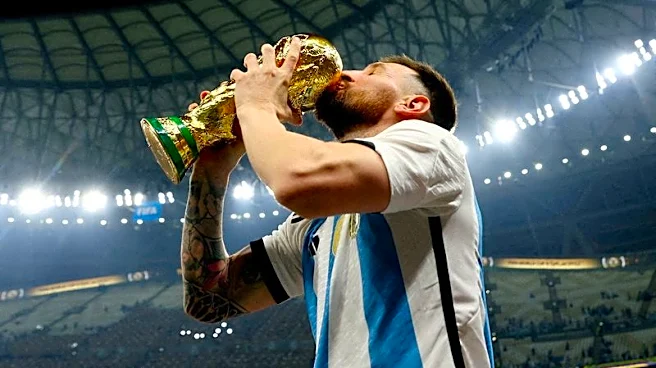
Think of the two most dominant, star-studded teams in your favorite sport, and then have them share a continent. That’s Argentina versus Brazil. Described by FIFA as the "essence of football rivalry," this is a clash of titans for South American, and often global, supremacy. It’s a conflict of styles, cultures, and legendary players—Pelé for Brazil, Diego Maradona for Argentina, and more recently, Neymar versus Lionel Messi. Their matches are rarely just friendlies; they are referendums on who is the true king of South American football. The rivalry has been filled with controversy, from accusations of spiked water bottles during the 1990 World Cup to brawls that have halted games. When these two meet, it’s a spectacle of skill and animosity that captivates the entire world, as seen in their frequent, high-stakes Copa América and World Cup qualifier clashes.
England vs. Germany: The Historic Grudge
This rivalry is rooted in 20th-century history and cemented by iconic World Cup moments. For English fans, it's the ultimate showdown, though Germans tend to view the Netherlands or Italy as their primary rivals. The defining moment was the 1966 World Cup final at Wembley Stadium, which England won in dramatic and controversial fashion for its only World Cup title. Since then, Germany has had the upper hand in the biggest moments, knocking England out of the 1990 World Cup and Euro 1996 in soul-crushing penalty shootouts. The English press often amplifies the rivalry, sometimes invoking wartime imagery. More recently, there was the infamous "ghost goal" in the 2010 World Cup, where a clear goal by England's Frank Lampard was disallowed, leading Germany to a decisive 4-1 victory and sparking the global conversation that led to goal-line technology.
Netherlands vs. Germany: The Painful Past
If the England-Germany rivalry is a simmering grudge, the Dutch rivalry with Germany is a raw, open wound with deep historical roots. The animosity stems from the German occupation of the Netherlands during World War II. This sentiment spilled onto the football pitch and was ignited in the 1974 World Cup final. The Dutch, with their revolutionary "Total Football," were the favorites but lost 2-1 to West Germany on German soil. For the Dutch, it was a national trauma. Midfielder Willem van Hanegem famously said he didn't care about the score as long as they could "humiliate" the Germans, stating, "They murdered my family." The Dutch finally got a measure of revenge by defeating West Germany in the Euro 1988 semifinals, also on German soil, a victory that prompted massive celebrations back home. The rivalry has also featured some of the sport's ugliest moments, including a spitting incident between Frank Rijkaard and Rudi Völler in the 1990 World Cup.