





The Movie and the Tightrope
David Cronenberg’s 2005 masterpiece, 'A History of Violence,' is a film built on a knife's edge. It stars Viggo Mortensen as Tom Stall, a small-town diner owner whose idyllic family life is shattered when his violent past comes calling. The film masterfully
explores the duality of human nature and the idea that you can never truly escape who you are. For most of its runtime, the film follows Tom as he insists he’s the victim of mistaken identity, a simple man caught in a gangster’s crosshairs. But as the story unfolds, it becomes clear that Tom Stall is a fiction, a carefully constructed identity for a man named Joey Cusack, a former mob enforcer from Philadelphia.
A Detour to Philadelphia
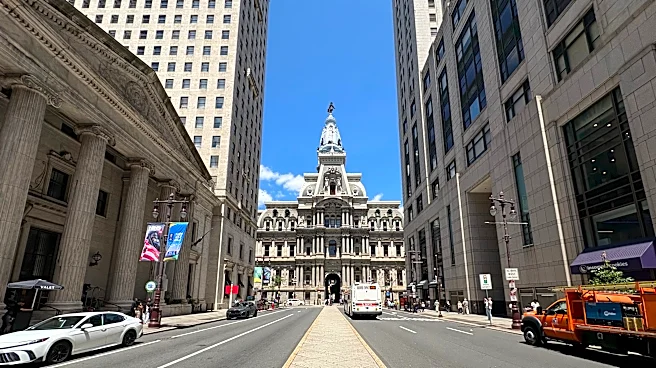
Late in the film, after a series of brutal confrontations, Joey is forced to return to Philadelphia to deal with the source of his troubles: his estranged older brother, Richie Cusack. On paper, this sequence presents a classic filmmaking dilemma. The main narrative tension in Tom/Joey's small town has largely been resolved. Introducing a new character and location so late in the third act can disrupt the pacing and feel like a detour. A director could easily be tempted to cut such a scene, perhaps resolving the Philadelphia plotline with a phone call or a quicker, more perfunctory confrontation to keep the story moving towards its conclusion.
An Unforgettable Ten Minutes
But then William Hurt walked on set. Cast as the formidable crime boss Richie Cusack, Hurt appears on screen for less than ten minutes. [1] He enters the scene descending a staircase, his voice a mix of gravelly menace and wounded familiarity. [1] In this single, contained scene, Hurt crafts a character portrait of breathtaking complexity. His Richie is not a one-dimensional villain. He's a man simmering with decades of resentment, a brother who feels both betrayed by and darkly proud of Joey's lethal talents. He swings from casual, almost nostalgic conversation about family to chilling threats with terrifying speed. Hurt’s performance is a masterclass in subtext, conveying a lifetime of shared history and bad blood in every glance and pregnant pause. [4]
The Director's 'Problem'
In a film already packed with stellar performances from Mortensen, Maria Bello, and Ed Harris, Hurt’s brief appearance is a showstopper. [1, 11] It’s so powerful, so magnetic, that it transcends its structural purpose. It becomes the film’s thematic climax. Director David Cronenberg recognized he had something special. [11] While the exact internal debate over cutting the scene remains part of film lore, the performance itself made the decision. You simply cannot cut a scene that electrifying. It becomes an anchor, not a detour. Hurt’s portrayal of Richie is so compelling that he makes the violent history of the title terrifyingly real and personal, providing the final, crucial piece of Joey’s psychological puzzle. [10]
The Legacy: An Oscar Nomination
The decision to keep the scene was not only vindicated, it was celebrated. For his ten minutes of screen time, William Hurt earned his fourth and final Academy Award nomination, for Best Supporting Actor. [2, 3] This rare feat—earning an Oscar nod for a single scene—cemented the legend of the performance. [8] It’s a testament to the idea that there are no small parts, only brilliant actors who can take a few pages of dialogue and turn them into something unforgettable. The confrontation between Joey and Richie isn't just a scene that was almost cut; it's a scene that proves why some performances are simply uncuttable.