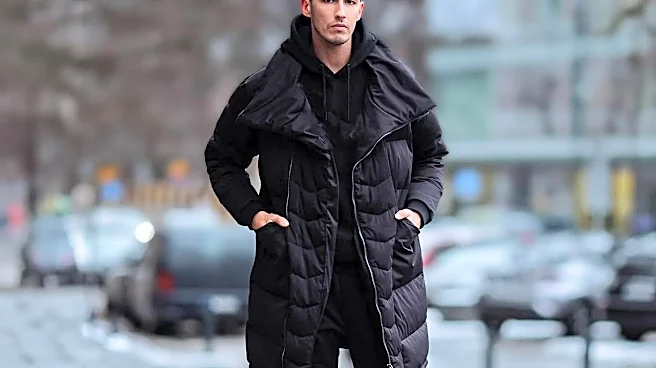








It’s the daily dilemma for millions: bundling up for a frigid morning journey, only to arrive at an office that’s blasting heat. This guide offers practical strategies to navigate those extreme temperature swings with style and comfort intact.
Embrace Strategic Layering
The key
to managing temperature swings is not one thick sweater, but several thin, independent layers. Think of your outfit in three parts: a base layer that’s comfortable on its own, a removable middle layer, and a protective outer layer for the commute. The base layer—a simple shell, a quality tee, or a fine-gauge knit—should be something you're happy to wear as your primary office top. Your middle layer, like a cardigan, unstructured blazer, or overshirt, provides warmth but can be easily shed and stored without disrupting your look. This approach gives you the flexibility to adapt as your environment changes throughout the day.
Prioritize Smart Fabrics
The right materials are your secret weapon. For warmth without bulk, turn to natural fibers like merino wool or cashmere. Merino is exceptional because it insulates, wicks moisture, and regulates temperature, keeping you warm but not sweaty. For the office, breathable fabrics are essential. Lightweight cottons, linen, Tencel, and modal allow air to circulate and release heat, preventing you from feeling stuffy at your desk. Avoid heavy synthetic fabrics like acrylic, which can trap heat and moisture, leaving you uncomfortable indoors and colder when you step back outside.
The Power of the 'Third Piece'
Elevate your base outfit with a versatile 'third piece' that completes your professional look but is easy to remove. This could be a structured-but-soft blazer, a stylish knit cardigan, or even a sweater vest. This item is your main tool for adapting to the office climate. A classic cardigan can be worn open, buttoned, or draped over your shoulders. A lightweight blazer adds polish for meetings and can be hung on your chair when you're at your desk. The key is choosing something that isn't too bulky to store or carry if you take it off.
Solve the Footwear Dilemma
Heavy, insulated winter boots are essential for a snowy or icy commute but can be miserably hot during an eight-hour workday. The simplest solution is to keep a pair of office-appropriate shoes at your desk. Loafers, flats, or low heels can be swapped upon arrival, instantly making you more comfortable. This strategy also protects your nicer work shoes from salt, slush, and water damage. Make sure your commuter boots are easy to slip on and off to make the transition seamless.
Lean on Weather-Ready Accessories
Accessories are the easiest layers to add and subtract. A warm scarf, gloves, and a hat can make a massive difference in comfort during your commute but take seconds to remove once you're indoors. A high-quality cashmere or fine-wool scarf provides significant warmth without being cumbersome. It can even double as a light wrap or shawl at your desk if you find the air conditioning is a bit too aggressive. These small items pack a big punch, allowing you to fine-tune your temperature with minimal effort.
Invest in a Commute-Friendly Coat
Your outermost layer is your shield against the elements. Look for a coat that provides genuine warmth but is also practical. Features like a 3-in-1 design, with a waterproof shell and a removable insulated liner, offer incredible versatility across different conditions. A classic wool overcoat that is long enough to cover a blazer is another timeless and professional choice. Ensure the coat has enough room in the shoulders and arms to comfortably fit over your indoor layers, like a blazer or a knit sweater, without feeling tight or restrictive.