



The Death of the Rigid Suit
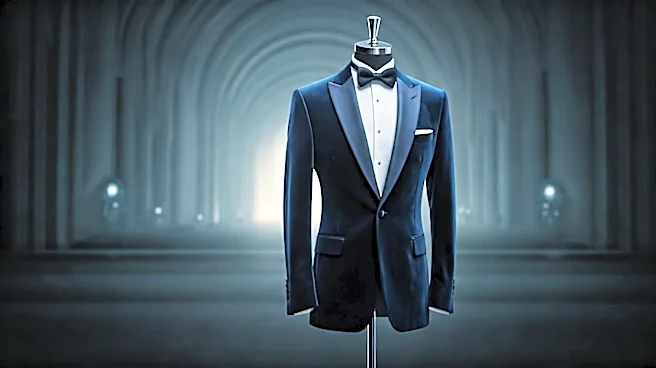
Before Kim Jones, the ideal masculine silhouette in formalwear was architectural and rigid, a holdover from military uniforms and Savile Row tradition. Jones, arriving at Dior Men in 2018, immediately softened those lines. His signature piece, the “Tailleur
Oblique” jacket, is a masterclass in this new philosophy. It wraps diagonally across the body, secured with a single button near the hip, creating a fluid, sash-like drape. This wasn’t just a new jacket; it was a new posture. Suddenly, tailoring could be gentle, almost liquid. Trousers became looser, pooling gently over sneakers or boots. The armor of the traditional suit was replaced with something more akin to a graceful second skin, suggesting that modern strength didn't have to be stiff. This shift gave men permission to look elegant without looking constrained, prioritizing comfort and movement even in the most formal settings.
High Art on the Red Carpet
Jones didn't just change the shape of menswear; he changed its surface. He transformed the runway into a gallery, collaborating with major contemporary artists to infuse his collections with cultural currency. His debut collection featured giant floral sculptures and bee motifs by artist KAWS, whose playful icons were embroidered onto shirts and accessories. He followed this with collaborations with Daniel Arsham, who created “future relics” of the Dior archive, and Amoako Boafo, whose painterly portraits were translated onto sweaters and shirts. This wasn't just slapping a painting on a t-shirt. Jones integrated the art into the very fabric of the clothes, turning a suit or a saddle bag into a piece of a larger cultural conversation. For the man wearing it, the garment became more than an outfit; it was a statement of taste and an alignment with the art world, making formalwear a vehicle for intellectual expression.
Couture Craft, Streetwear Spirit
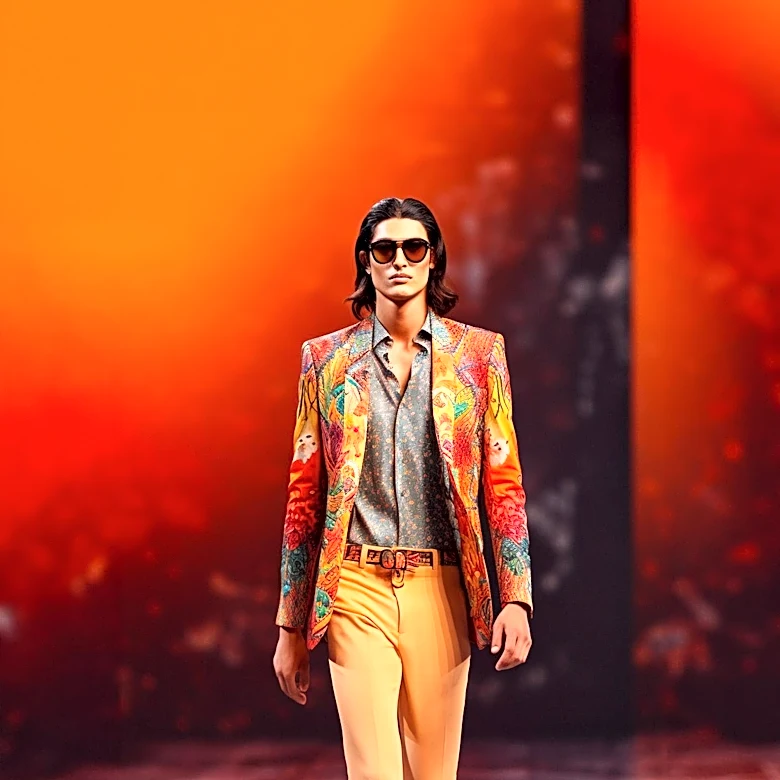
Perhaps Jones’s most significant contribution has been the seamless fusion of haute couture techniques with a streetwear sensibility. He mined the Dior women's archive for inspiration, applying its delicate embroidery, intricate beadwork, and luxurious fabrications to menswear. A simple sweater might be covered in thousands of hand-sewn beads; a jacket lining might feature a pattern derived from Christian Dior’s personal china. But he paired these exquisite details with profoundly modern, often utilitarian, items. Industrial-style buckle belts, chest rigs, high-top sneakers, and reimagined saddle bags became new formalwear staples. This high-low mix created a look that was both deeply respectful of the brand's heritage and completely in tune with how a younger generation wants to dress. It proved that luxury isn’t about formality alone, but about an obsessive attention to detail, whether on a silk lapel or the sole of a sneaker.
Redefining the Leading Man
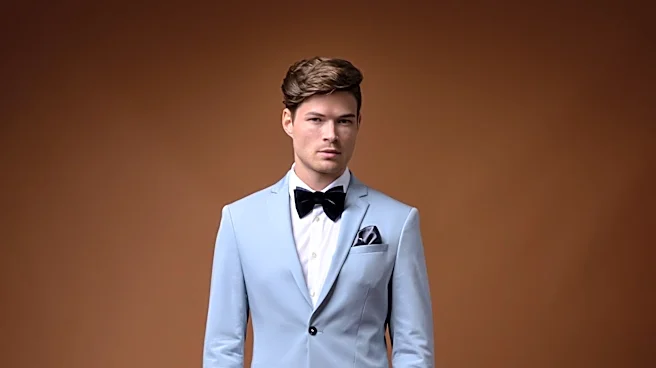
Nowhere has the Kim Jones effect been more visible than on the red carpet. He found willing collaborators in a new generation of Hollywood stars eager to push boundaries. When Timothée Chalamet wore a black shirt and an embellished, harness-like bib from Dior to the 2019 Golden Globes, it broke the internet. It was provocative, elegant, and entirely new. Jones has since dressed actors like Robert Pattinson and Nicholas Hoult in suits of dusty rose, pale blue, and shimmering silver, colors once reserved for womenswear. He put men in sheer, organza shirts and draped them in opulent satin capes. These weren’t costumes; they were the new uniform for a leading man who could be vulnerable, artistic, and decorative. By offering a richer, more expressive vocabulary for formal dressing, Jones didn't just give men new clothes to wear—he gave them new ways to be seen.