






The Ultimate Inciting Incident
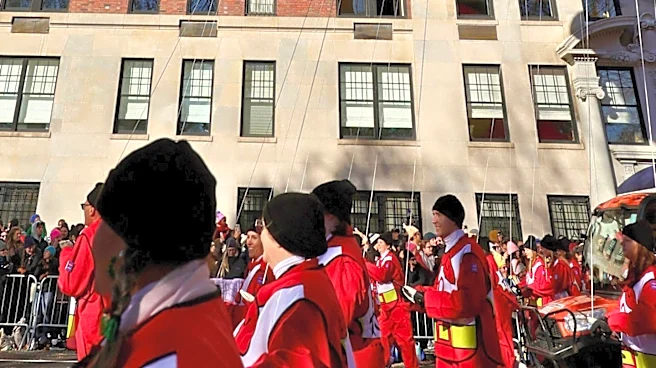
The film doesn't waste a moment. Its story kicks off amidst the real-life hustle and bustle of the Macy's Thanksgiving Day Parade. Doris Walker, the pragmatic event director for Macy's, discovers that the man hired to play Santa Claus is drunk. In a moment of desperation,
she persuades a seemingly random, white-bearded old man named Kris Kringle to take his place. This isn't just a convenient plot point; it's the engine for the entire movie. Edmund Gwenn, the actor playing Kris, even rode as Santa in the actual 1946 parade to capture authentic footage, cementing the link between the real-world event and the film's fiction. By placing the 'real' Santa at the helm of the most famous float in America's most famous parade, the film immediately establishes Kris Kringle's legitimacy in the eyes of the public, setting the stage for his subsequent job at the 34th Street store.
A Brilliant Bridge Between Holidays
The choice to start on Thanksgiving is a masterful piece of thematic groundwork. Thanksgiving is a holiday centered on gratitude, family, and a sense of community—qualities the film argues are being eroded by the crass commercialism of the modern Christmas season. The film's creator, Valentine Davies, was famously inspired after standing in a crowded department store line, feeling the holiday spirit had become lost. The narrative literally moves from a day of thanks to a season of wanting. By starting on Thanksgiving, the film establishes an emotional baseline. It uses the calmer, more reflective holiday to set up a story about restoring the soul of the more chaotic one that follows. Kris Kringle's journey from the parade route to the courtroom is a quest to prove that the spirit of giving—so central to Thanksgiving—is the true meaning of Christmas, not just buying more stuff.
Taking on Commercialism from the Inside
The Macy's parade is the ultimate symbol of holiday commerce kicking into high gear. It’s a spectacular, hours-long advertisement letting everyone know the shopping season has officially begun. The film leans directly into this. By having Kris step into this commercial behemoth, it immediately establishes the story's central conflict: genuine faith versus cynical profit. This theme deepens once Kris starts working in the store. He horrifies management by sending customers to other stores, like rival Gimbels, if Macy's doesn't have the exact toy a child wants. But this radical, anti-commercial act has an ironic effect: it generates immense goodwill and customer loyalty, proving that decency is good business. Mr. Macy himself declares a new store policy of putting 'public service ahead of profits,' a direct result of the authentic spirit Kris brought from the Thanksgiving parade into the heart of the retail machine.
Grounding the Magic in Reality
Before the film asks you to believe a man is Santa Claus, it grounds you in something undeniably real: a cherished American tradition. The Macy's Thanksgiving Day Parade is an event viewers knew and loved, making the fantastical story that follows feel more plausible. The story of 'Miracle on 34th Street' is about a clash between faith and cynicism, most embodied by the jaded Doris Walker and her daughter, Susan, whom she has raised not to believe in fairy tales. By having the magic begin at a real, tangible event, the film invites the audience to suspend its disbelief alongside the characters. The journey from a very public, universally recognized parade to a deeply personal belief in Santa feels earned. The 'miracle' isn't just that Kris might be Santa; it's that cynical, modern people can learn to believe in something again, a journey that starts with the simple, communal joy of a holiday parade.