






Beyond 'Buttery Soft' and 'Squat-Proof'
When shopping for yoga pants, we're conditioned to look for a few key things: a fabric that feels 'buttery soft,' a fit that promises to be 'squat-proof,' and a high waistband that won't roll down. Online reviews are flooded with these terms. And while
they're important for initial comfort and confidence, they don't tell the whole story about how a pair of leggings will hold up over time. The real markers of quality—the details that separate a $20 pair from a $100 pair—are often found in the construction, not just the material feel. Cheaper leggings often use simpler patterns and construction methods to save on costs. They might feel great on day one, but they are not engineered for the stress of repeated deep squats, lunges, and downward dogs. This is where a small, unassuming piece of fabric makes all the difference.
The Telltale Sign of Quality: The Gusset
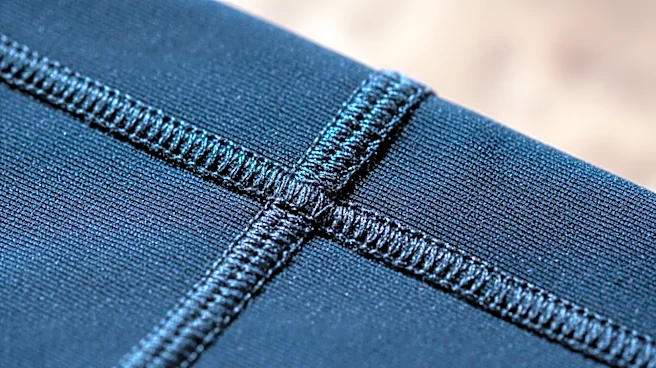
The hidden detail that savvy shoppers and apparel designers swear by is the gusset. Turn a pair of leggings inside out and look at the crotch. In a cheaply made pair, you'll likely see four seams crashing together in a simple cross shape. This creates a single, high-stress point that’s prone to ripping under pressure. In a higher-quality pair, however, you'll find a separate patch of fabric sewn into that area, usually in a triangular or diamond shape. This is a gusset. This small panel of fabric is a hallmark of thoughtful engineering in clothing, designed to do one crucial job: redistribute stress. Instead of all the tension from movement converging on one weak point, the gusset spreads that force across multiple seams, dramatically increasing the garment's durability and range of motion.
Why This Small Fabric Patch Matters So Much
A gusset is more than just a reinforcement; it fundamentally improves the fit and function of yoga pants. By adding extra fabric and creating a more ergonomic shape, a gusset allows for greater freedom of movement, which is essential for yoga, pilates, or any workout. It prevents that restrictive pulling feeling when you stretch and helps the leggings move with your body instead of against it. Furthermore, a gusset eliminates the dreaded 'camel toe' that can occur when a single center seam pulls the fabric taught in all the wrong ways. It also significantly reduces chafing by creating a smoother, more comfortable fit in a high-friction area. In essence, a pair of leggings with a gusset isn't just a tube of fabric for each leg; it's a properly constructed piece of athletic equipment designed for performance and longevity.
How to Be Your Own Quality Inspector
Now that you know the secret, you can spot quality in seconds. Before you buy any pair of leggings, flip them inside out and check the crotch. Is there a diamond or triangle-shaped panel? If yes, that's a huge green flag. If you see four seams meeting at a single point, you're likely looking at a lower-quality garment that may not last. While you're inspecting the seams, look for flatlock stitching. These are flat, smooth seams that lie flush against the fabric, often looking like a ladder. This type of stitching is another sign of quality, as it's designed to prevent chafing and stretch with the fabric, unlike bulkier overlock seams found on cheaper apparel. Don't just rely on the fabric's GSM (grams per square meter), which indicates its thickness and opacity. While a higher GSM (ideally 220 or more) is good for coverage, it means little if the construction itself is weak.