








The Impossible Standard
Let’s be honest: the soundtrack to 2016’s Moana was lightning in a bottle. The fusion of Lin-Manuel Miranda’s Broadway-honed lyrical wizardry with Opetaia Foaʻi's authentic Pacific musicality and Mark Mancina's sweeping score created something truly special.
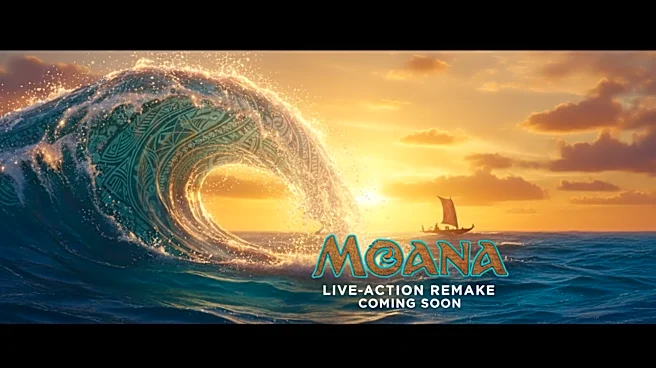
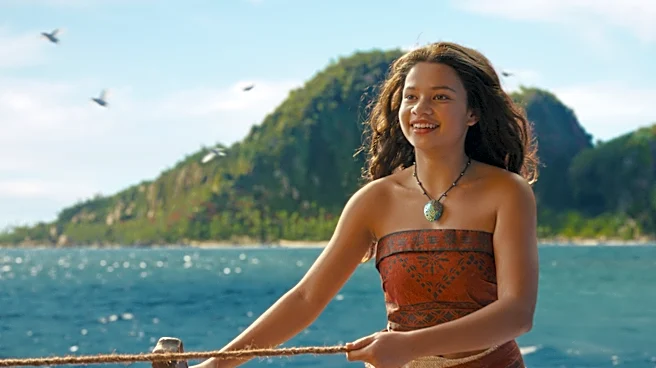
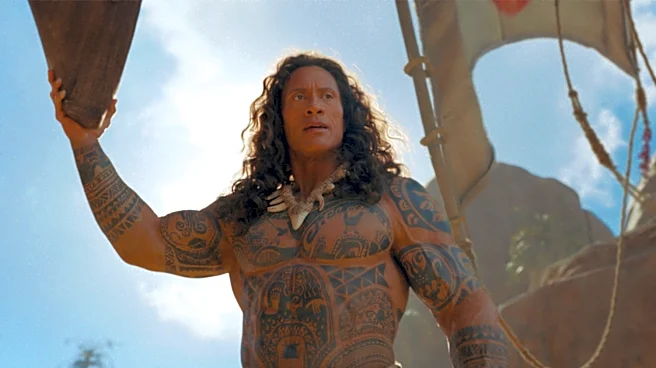
Songs like the Oscar-nominated "How Far I’ll Go" became anthems of self-discovery, while Dwayne Johnson’s impossibly charismatic delivery of "You’re Welcome" turned a boastful demigod into a global icon. The music wasn’t just accompaniment; it was the film’s heartbeat, driving the narrative and embedding itself in the cultural lexicon. This is the challenge facing director Thomas Kail (of Hamilton fame) and the new film, which stars newcomer Catherine Lagaʻaia as Moana opposite Johnson, who reprises his role as Maui. The expectation isn't just for good songs, but for songs that recapture a specific, near-perfect magic. Anything less risks feeling like a cover band playing the hits.
Disney's Double-Edged Playlist
Disney's live-action remakes have a mixed track record when it comes to music. For every success, there's a cautionary tale. 2019's Aladdin added the powerful, if slightly out-of-place, ballad "Speechless" for Jasmine, giving the character more agency but highlighting the difficulty of weaving new threads into a classic tapestry. On the other end of the spectrum, The Lion King's hyper-realistic remake was criticized for musical numbers that lacked the vibrant emotional punch of the animated original. The performances, while technically proficient, often felt hollow, constrained by the need for photorealism. The danger for Moana is falling into the latter category. A shot-for-shot, note-for-note recreation would be the safest route, but it's also the most creatively bankrupt. It would flatten the performances, asking new actors like Catherine Laga'aia to essentially do karaoke instead of truly inhabiting their roles. The film has to justify its existence beyond being a technological update, and music is the primary battleground.
A New Song as a Statement of Intent
Thankfully, the creative team seems aware of this trap. Lin-Manuel Miranda, who returns as a songwriter and producer, has penned a new song for the film titled "Along the Way". In a savvy move that bridges the gap between old and new, the song is performed by a trio: new Moana Catherine Lagaʻia, original Moana voice actress Auliʻi Cravalho, and Dwayne Johnson. Cravalho, who is also an executive producer on the film, passes the torch in a symbolic musical conversation. This isn’t just a bonus track; it’s a statement. It signals that the new film is in dialogue with the original, not just copying it. It acknowledges the legacy while simultaneously planting a flag for something new. By creating a meta-narrative within the music—uniting the two Moanas—the filmmakers are showing they understand the tightrope they have to walk. It’s a way to weaponize nostalgia for a good cause, making fans feel included rather than pandered to.
Finding a New Horizon
The ultimate success of the live-action Moana will hinge on its willingness to chart its own course. The return of Johnson and songwriter Jemaine Clement (as the voice of Tamatoa) provides a strong link to the original's comedic and musical spirit. But the true test will be how the film gives its new star, Catherine Lagaʻia, the space to make Moana her own. A new song is a great start, but the classic numbers also need to feel reinterpreted, not just re-recorded. The live-action medium offers different opportunities for performance—a quiet, introspective moment on a real beach can hit differently than an animated swell of emotion. The goal shouldn’t be to replace “How Far I’ll Go,” but to offer a new perspective on what that song means to a new performer in a new context. If the film simply re-creates the original's musical beats, it risks making its talented cast feel like puppets. But if it uses the original score as a foundation to explore new emotional depths and character moments, it can become a worthy companion to a modern classic.