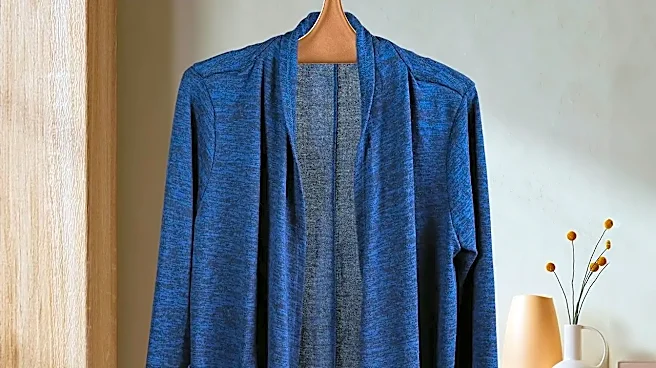





It’s the go-to for cozy days, preppy looks, and effortless layering. But the humble cardigan, now a universal wardrobe staple, started not in a design studio but on the battlefield, born from the harsh realities of 19th-century warfare.
A Military Original
The cardigan's
story begins with James Brudenell, the 7th Earl of Cardigan, a British army officer known more for his sartorial flair than his military genius. During the brutal Crimean War in the 1850s, Brudenell and his fellow officers wore knitted wool waistcoats to stay warm under their uniforms. These button-front garments provided an essential layer against the bitter cold without restricting movement. Though Brudenell led the infamous and disastrous Charge of the Light Brigade, his name became inextricably linked with the practical sweater. When he returned to Britain, his celebrity, however controversial, helped popularize the garment, and merchants quickly began marketing the style. Originally a sleeveless vest, the 'cardigan jacket' soon evolved to include sleeves, transitioning from military necessity to civilian menswear.
From the Battlefield to the Ivy League
By the late 19th and early 20th centuries, the cardigan had firmly left the battlefield behind. It found a new home in the worlds of sports and academia, becoming a symbol of informal, respectable masculinity. Gentlemen wore them for outdoor pursuits like golf and fishing. Its association with leisure and the rise of sportswear helped it become a fixture in the everyday man's wardrobe. In the United States, it became a key component of the 'Ivy League' look, a preppy staple for college students who paired it with collared shirts and khakis. This academic and athletic context gave the cardigan an air of relaxed sophistication that defined it for decades.
Coco Chanel's Revolution
The cardigan's leap into womenswear can be largely credited to one iconic designer: Gabrielle 'Coco' Chanel. In the 1920s, Chanel was revolutionizing women's fashion by prioritizing comfort and ease of movement. She famously disliked traditional pullover sweaters because they messed up her hair when she put them on. Inspired by menswear and the fabrics used for it, she began designing cardigan-style jackets and suits using soft jersey, a material previously used for men's underwear. Her designs freed women from the era's restrictive, wasp-waisted silhouettes, offering a chic, comfortable, and modern alternative. This was more than a fashion choice; it was a statement of independence.
A Symbol of Comfort and Countersture
As the 20th century progressed, the cardigan became a canvas for cultural expression. In the 1940s, female college students adopted oversized men's cardigans, known as 'Sloppy Joes,' as a form of rebellion against prescribed femininity. In the 1950s, Hollywood stars like Marilyn Monroe and Grace Kelly cemented the fitted cardigan as a staple of chic, preppy style. For men, it became associated with dependable, gentle figures like television's Fred Rogers. But the cardigan also had a rebellious streak. In the 1990s, grunge icon Kurt Cobain's adoption of slouchy, thrift-store cardigans transformed the garment into a symbol of anti-establishment cool, proving its remarkable versatility.
The Universal Layer
Today, the cardigan belongs to everyone. Its journey from a male military garment to a unisex fashion essential reflects broader shifts in how we live and dress. The rise of casual wear, the blurring of gender lines in fashion, and a collective desire for comfortable, functional clothing have all secured the cardigan's place in the modern wardrobe. From chunky cable-knits to sleek, minimalist designs, it can be preppy, punk, professional, or purely for comfort. It serves as a simple, adaptable layer that carries with it a surprisingly rich history of function, rebellion, and style.