



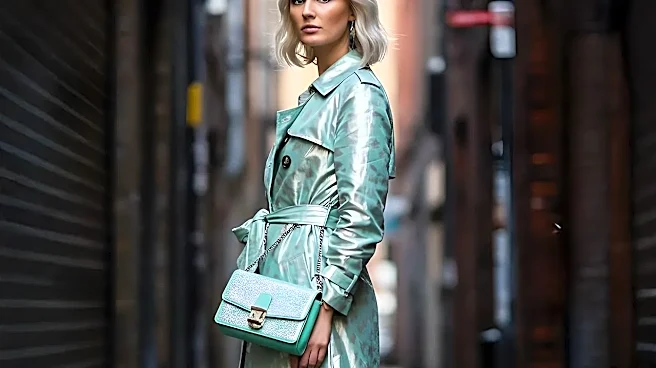


The Power of Studied Nonchalance
There's a reason why some of the most stylish people look like they just threw something on and walked out the door. It’s a concept the Italians have a word for: 'sprezzatura'. First coined in the 16th century, it describes a kind of studied nonchalance—the
art of making something difficult look effortless. In fashion, it translates to concealing the effort you put into your look. It’s about looking great without appearing fussy or like you tried too hard. That perfectly imperfect detail—the slightly unbuttoned cuff, the watch worn over a shirt sleeve, or the jacket left undone—isn't a mistake. It’s a whisper of rebellion against rigid perfection, a sign that your personality is more important than the rules. This approach makes an outfit feel more human and less like a department store mannequin.
Meet the ‘Wrong Shoe Theory’
One of the easiest ways to embrace this philosophy is through what has been dubbed the 'Wrong Shoe Theory,' a concept popularized by stylist Allison Bornstein. The idea is simple: intentionally pair an outfit with shoes that feel slightly mismatched or unexpected. Think of a delicate floral dress paired not with dainty heels, but with chunky 'dad' sneakers. Or a sharp, tailored pantsuit worn with casual slip-ons instead of formal pumps. This single point of contrast creates a dynamic tension that makes the entire look more interesting and memorable. It signals intention; you didn't just get dressed, you styled yourself. It transforms a straightforward outfit into one with personality and a modern edge.
The Fine Line Between Intentional and Sloppy
Of course, there’s a method to the madness. The goal is to look deliberately unpolished, not genuinely messy. The key is that the 'unpolished' detail must be a conscious choice that contrasts with an otherwise put-together look. If your entire outfit is wrinkled, ill-fitting, and scuffed, it just looks sloppy. But when a pristine, tailored suit is paired with clean, minimalist sneakers, the contrast works. The 'wrong' element needs the 'right' context to shine. It's about knowing the rules of dressing perfectly so you can break one of them with confidence. The rest of your outfit provides the polished foundation that makes the single point of imperfection feel like a deliberate, stylish statement rather than an accident.
How to Make It Your Own
You don't need to overhaul your wardrobe to try this. Start small. Take a classic outfit, like jeans and a blazer, and swap the predictable loafers for a pair of unexpected sandals or a bold-colored flat. Consider other forms of 'high-low' dressing, like pairing a sequin skirt with a simple white t-shirt for a daytime look, or throwing a casual biker jacket over a formal dress. The unpolished detail can also be an accessory: a utilitarian bag with a dressy outfit, or a casual belt with tailored trousers. The most important part is that it feels authentic to you. The goal isn't to copy a trend, but to use it as a tool to inject more of your own personality into the clothes you already own.