





The Powerful Promise of Toy Story 2
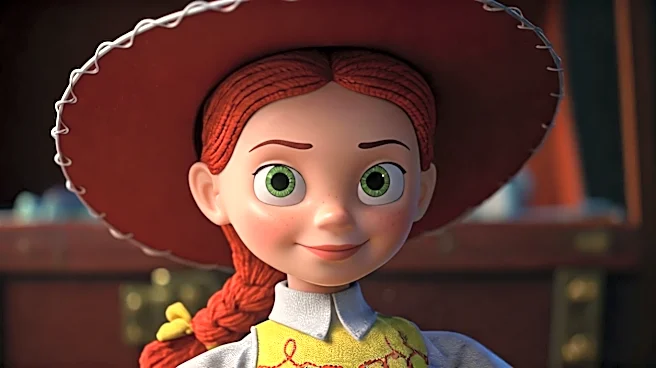
Let’s rewind to 1999. Toy Story 2 didn’t just give us a great sequel; it gave us Jessie, a character with more built-in pathos than almost anyone in the Pixar canon. Her backstory, delivered through the gut-wrenching ballad “When She Loved Me,” revealed
a soul defined by abandonment. She wasn’t just a fun cowgirl; she was a whirlwind of anxiety, joy, and deep-seated trauma. Her claustrophobia in the storage box wasn’t a gag; it was a physical manifestation of her fear of being forgotten. She was fiery, independent, and initially positioned as Woody’s equal and counterpart. She challenged him, stood up to him, and ultimately found a new family. The film promised us a complex, compelling character who could carry significant emotional weight. For a moment, it felt like the trio of Woody, Buzz, and Jessie would be the franchise’s new foundation.
How Later Films Sidelined Her
Then, something happened. Toy Story 3, for all its emotional brilliance, began the process of reducing Jessie. Her primary role became one-half of a romantic subplot with Buzz Lightyear. While their “Spanish mode” dance was entertaining, it sanded down her interesting edges. Her fears and anxieties were still present, but they were often played for laughs or as a catalyst for Buzz to comfort her. She became less of a leader and more of a designated worrier. By Toy Story 4, the problem was even more acute. She was relegated to a background player, offering concerned glances from the RV while Woody and Bo Peep drove the entire emotional narrative. The fiery cowgirl who once wrestled with her past was now a supporting character whose main function was to miss Woody. The promise of Toy Story 2 was completely forgotten, leaving her as a character with untapped potential gathering dust on the narrative shelf.
The Leadership Vacuum Woody Left Behind
Woody’s exit at the end of Toy Story 4 wasn’t just the departure of a main character; it was the removal of the group’s heart and soul. Woody was the glue. His purpose was always about keeping the “family” of toys together, first for Andy and then for Bonnie. Buzz, despite being his best friend and co-star, can’t fill that specific role. Buzz’s journey has always been about self-discovery, from realizing he’s a toy to finding his “inner voice.” He’s a hero and an explorer, but he’s not the shepherd Woody was. This creates a massive power vacuum in the group’s dynamic. Without a central figure whose primary concern is the collective, the toys are just a loose collection of friends. There is no one to rally them, to soothe their fears, or to make the tough calls about their shared purpose. This is the central challenge facing Toy Story 5: who will hold the family together?
Jessie's Chance to Finally Lead
This is where solving the “Jessie problem” becomes the key to the franchise’s future. Toy Story 5 has a golden opportunity to finally fulfill the promise of her character by making her the new leader. Her entire backstory makes her uniquely qualified for the role. Who better to understand the existential terror of being a lost or unwanted toy? Who better to fight for the sanctity of the group than someone whose greatest fear is being abandoned again? Making her the protagonist would allow the story to explore mature themes from a new perspective. The film could center on her stepping into Woody’s shoes, struggling with the weight of leadership, and finally confronting her trauma not as a weakness, but as the source of her strength. This isn’t about simply giving her more screen time; it’s about making her journey the core of the narrative. It’s a chance to transform her from a sidekick into the sheriff the toys now desperately need.