






The Villain We Trusted
To understand the significance of Damon playing the heroic, wandering king Odysseus, you have to go back to a frozen, desolate planet. In 2014’s Interstellar, Damon’s appearance was a well-kept secret. When he showed up as Dr. Mann, the celebrated leader
of the Lazarus missions, it felt like a moment of hope. Here was a familiar, trustworthy face in the vast emptiness of space. Nolan cast him for exactly that reason. He needed an actor who projected such integrity that his eventual betrayal would feel like a gut punch to the audience. Dr. Mann, driven mad by isolation, faked his data simply to be rescued. He was a coward and a murderer, a man who chose his own survival over the future of humanity. It was a small but crucial role that established the first phase of their collaboration: Damon as the fallen man, the symbol of hope turned into a cautionary tale.
The Grounded Center
Nearly a decade later, Damon returned to the Nolan universe for Oppenheimer. This time, he wasn’t a secret cameo but a core part of the ensemble. He played Lieutenant General Leslie Groves, the gruff, no-nonsense military man in charge of the Manhattan Project. Where Dr. Mann was deceitful and unraveled, Groves was brutally pragmatic and unshakably focused. He was the immovable object tasked with managing the unstoppable force of J. Robert Oppenheimer’s genius. Damon portrayed Groves as a man who, while often unlikable, was undeniably effective and the right person for the job. The role showcased a different side of Damon’s utility for Nolan. He was no longer the desperate survivor at the edge of the world, but the grounded, organizational center of a world-changing historical event. He was the bureaucrat to the physicist, the general to the genius, providing a crucial, stabilizing contrast.
The Mythic Wanderer
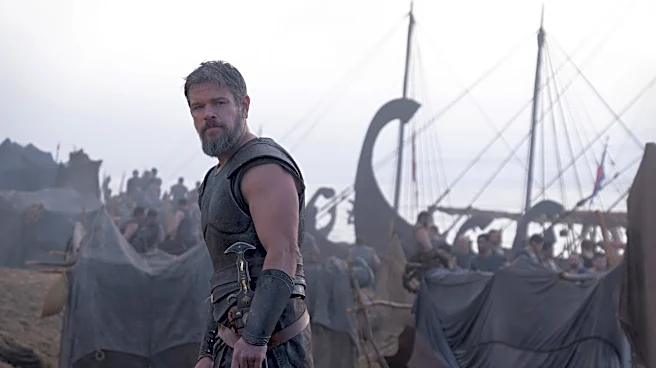
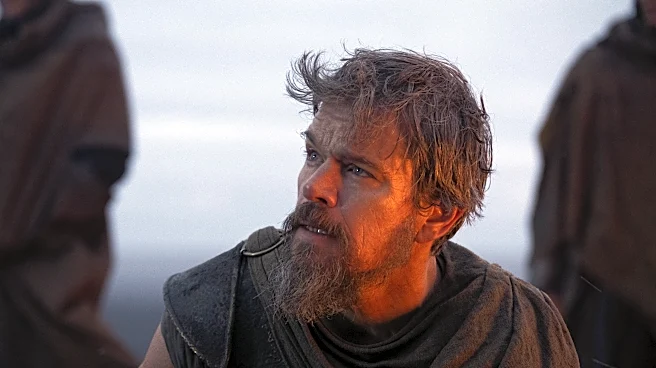
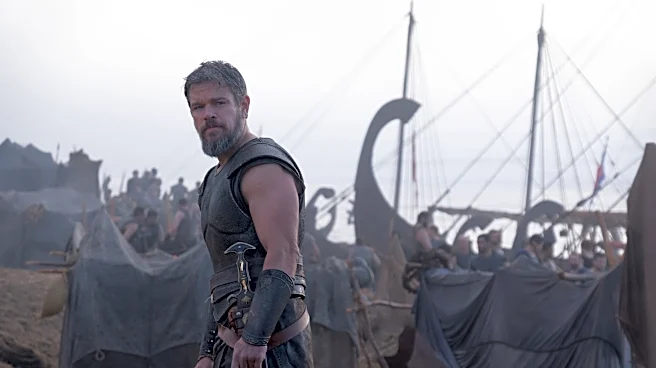
Now, with The Odyssey, their collaboration takes its most significant leap. Damon is stepping into the lead role of Odysseus, the legendary Greek king on a 10-year journey home after the Trojan War. After playing a villain and a pivotal supporting character, Damon is now the epic’s hero—a complex one at that. In Homer’s poem, Odysseus is a brilliant strategist and a cunning survivor, but also a flawed man who makes mistakes and endures immense suffering. Nolan himself has expressed interest in Odysseus’s complicated nature, citing his cleverness and inventiveness. For the director, Damon possesses the rare ability to portray an extraordinary, almost superhero-like figure who remains emotionally accessible to the audience. After years of being stranded on distant planets in films like Interstellar and The Martian, the role of the ultimate lost traveler feels like a thematic homecoming for the actor.
A Journey in Three Acts
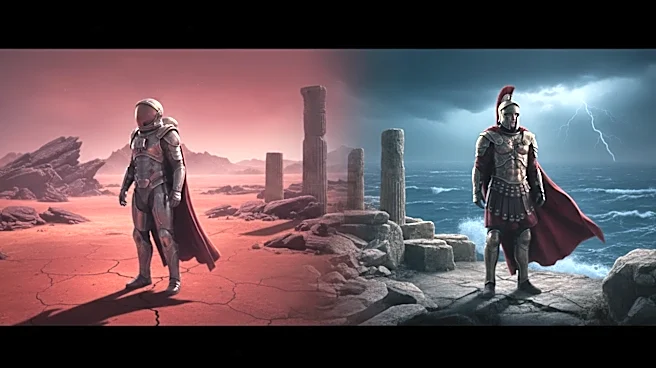
Looking at these three roles together reveals a fascinating creative arc. It’s a journey that moves from antagonist to supporting player to protagonist. Damon began as Dr. Mann, a character who represents the failure of humanity under pressure. He then became Leslie Groves, a man who embodies the rigid structure required to achieve the impossible. Now, as Odysseus, he embodies the very essence of human endurance—the long, arduous struggle to return home. It’s clear that Nolan sees Damon as more than just a reliable movie star; he’s an actor capable of exploring different, complex facets of survival and leadership. The progression suggests a deliberate path, with Nolan rewarding Damon’s willingness to take on smaller, vital parts with the lead in his most ambitious spectacle to date. What once looked like a series of convenient casting choices now looks like a deliberate, three-act story about what it means to be a man at the far limits of human experience.