

More Than Pressing 'Next'
At a major music festival, the changeover between artists is a high-pressure ballet of logistics and technology. While the audience sees roadies swapping gear, the most complex work happens at the Front of House (FOH) mixing console. Switching from a hip-hop
act to a rock band isn't like changing tracks on a playlist; it's like re-engineering a car while it's still on the racetrack. The two genres have fundamentally different sonic needs, and the engineer has a tiny window—often just 15 to 20 minutes—to completely remap the audio landscape for a crowd of thousands. This feat of “gorilla mixing” is won or lost long before the first fader is pushed, relying on meticulous planning, deep genre knowledge, and powerful digital tools.
The Rap Blueprint: Bass and Vocal Clarity
A hip-hop performance is built around two pillars: the commanding presence of the vocal and the chest-rattling impact of the low end. The rapper's voice is the undisputed focal point. It needs to be intimate, aggressive, and crystal clear, sitting right on top of the mix as if the artist is speaking directly to you. Engineers often use specific processing techniques to keep the vocal present and intelligible against a dense beat. The other critical element is the bass, particularly the synthesized boom of an 808 kick drum or a deep sub-bass line. These frequencies are foundational to the genre's energy. In a live setting, the challenge is to reproduce this immense low-end power without it turning into a muddy, distorted mess. Compared to a full rock band, there are typically fewer live microphones on a rap stage, which simplifies some aspects but puts even more pressure on perfecting the main vocal and the playback tracks.
The Rock Onslaught: Taming Sonic Chaos
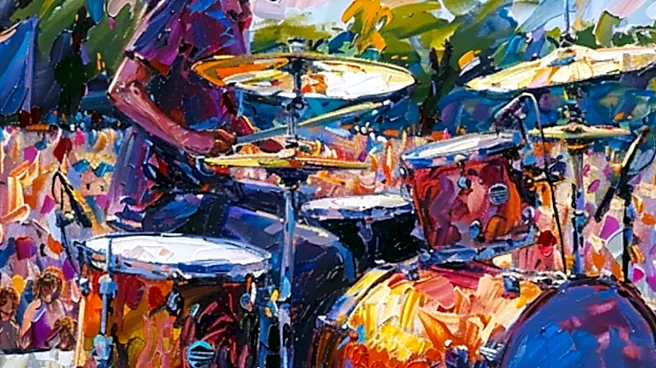
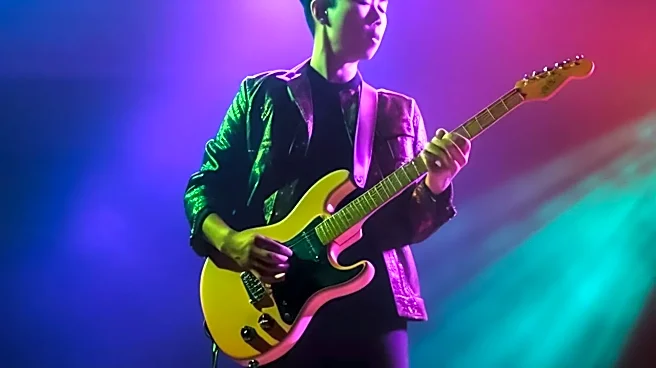
Then the rock band plugs in. Suddenly, the audio environment is flooded with a completely different set of problems. Instead of a single, pristine vocal, the engineer is now wrangling a lead singer who is competing with a wall of distorted guitars, a thunderous acoustic drum kit, and a bass guitar. Rock music lives in the mid-range frequencies, a sonic space where crunchy guitars and human vocals often fight for dominance. A huge part of mixing rock is carving out a space for the vocals so they don't get buried. Furthermore, the drum kit alone might use a dozen or more microphones—one for the kick, snare, toms, and overheads capturing the cymbals. Each mic is a potential source of feedback and can pick up unwanted 'bleed' from other instruments on stage, which can muddy the mix if not managed carefully. The engineer’s job transforms from spotlighting a vocal to corralling a beautiful, chaotic stampede of sound.
The Tech That Makes It Possible
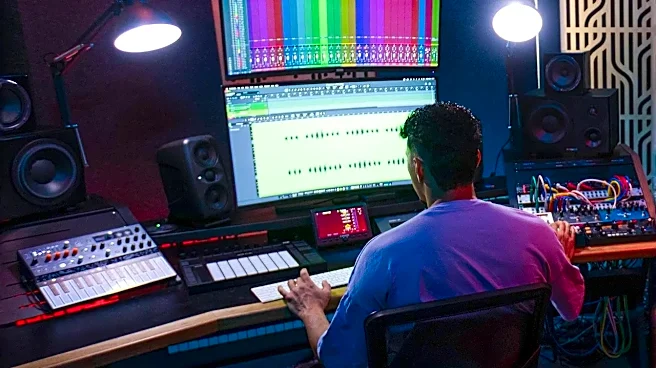
This rapid-fire alchemy is only possible because of modern digital mixing consoles. Engineers for touring acts arrive at festivals with a USB stick containing their “show file.” This file is a complete digital snapshot of their preferred settings for every single channel—from EQ curves on the lead guitar to the specific reverb used on the vocals. During the changeover, the festival’s FOH engineer can load this file, and the console instantly recalls the visiting engineer's starting point. These 'scenes' or 'snapshots' are a life-saver, providing a baseline mix that can then be fine-tuned to the specific stage and PA system. This preparation, combined with the tireless work of stage technicians placing mics precisely and verifying every connection, is what turns a seemingly impossible 20-minute window into just another day at the office for the unsung heroes of live music.