



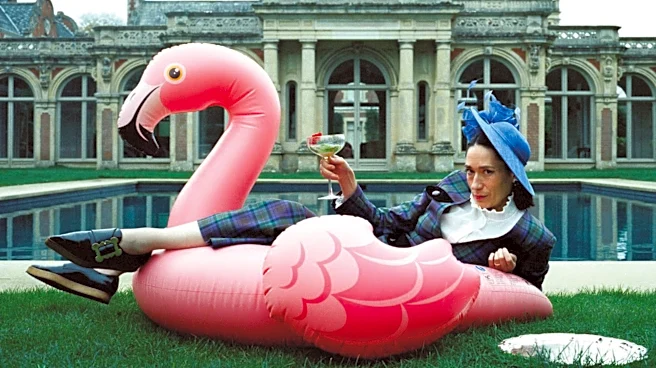
Phoebe Waller-Bridge
The most direct modern parallel to West's writer-performer model is Phoebe Waller-Bridge. She created, wrote, and starred in her own star-making vehicle, "Fleabag," turning a one-woman stage show into a global phenomenon. Much like West, who used her plays
to craft her persona, Waller-Bridge built a character that was sexually frank, emotionally complex, and unapologetically messy. Her work constantly breaks the fourth wall, inviting the audience into her confidence with a conspiratorial wink—a technique West perfected by making the audience her primary scene partner. Both artists masterfully blend comedy with vulnerability, using humor to explore grief, desire, and the messiness of being a woman in a world that isn't quite ready for you.
Natasha Lyonne
With her unmistakable raspy voice and sharp, New York-honed wit, Natasha Lyonne exudes a world-weary wisdom that feels deeply West-ian. But the comparison goes deeper than persona. Lyonne co-created, wrote, directed, and starred in the critically acclaimed Netflix series "Russian Doll," demonstrating a complete creative vision. She didn’t just show up to act; she built the entire universe for her character, Nadia Vulvokov, to inhabit. This drive to control the narrative from the ground up is pure Mae West, who famously wrote and produced her own controversial Broadway plays like "Sex" in the 1920s. Lyonne, like West, proves that the most powerful roles are often the ones you write for yourself.
Amy Schumer
If Mae West were navigating Hollywood today, she'd likely face the same controversies that have followed Amy Schumer. West was arrested for the content of her play "Sex," and Schumer has built a career on equally unapologetic and bawdy humor that directly confronts female sexuality and societal double standards. Schumer's breakout film, "Trainwreck," which she wrote and starred in, is a modern spiritual successor to West’s filmography. The movie explores a protagonist who is promiscuous and commitment-phobic, themes West herself championed in films like "I'm No Angel." Both performers use comedy to disarm audiences before hitting them with frank discussions about what women want, much to the chagrin of censors and critics then and now.
Catherine O'Hara
While Mae West largely perfected one iconic persona, Catherine O'Hara's genius lies in her ability to create a dozen of them from scratch. Her foundational work on the sketch comedy show "SCTV" saw her develop a stable of unforgettable, gloriously strange characters, from the vapid lounge singer Lola Heatherton to the perpetually flustered Dusty Towne. This is a different kind of range, but it stems from the same creative impulse West had: the need to build a character from the inside out, complete with a unique voice, cadence, and worldview. O'Hara co-wrote much of her material on "SCTV," displaying a writer's mind for comedic construction that West, who meticulously crafted her own scripts and dialogue, would have surely respected. Both possess an unteachable knack for comedic timing and a flair for the theatrical.
Sharon Stone
In the early 1990s, no one embodied the dangerous, seductive power of the femme fatale better than Sharon Stone in "Basic Instinct." Much like West in the 1930s, Stone became a lightning rod for controversy, using overt sexuality as a tool of power and intellect that both thrilled and terrified audiences. The infamous interrogation scene became a cultural flashpoint, debated and analyzed for its audacity—a level of notoriety West actively courted and, in her words, "made a fortune out of." While West used witty double entendres to dance around the censors, Stone's performance was a direct and unflinching challenge to cinematic norms. Both actresses cemented their legacies by portraying women who were entirely in control, especially when men thought they held all the power.
Megan Thee Stallion
Mae West’s blueprint for success wasn't confined to the screen; it was about building a powerful, self-defined brand. In the modern music world, Megan Thee Stallion follows that playbook to the letter. She is a songwriter who crafts her own sexually confident and assertive lyrics, creating distinct personas like "Tina Snow" and the "Hot Girl Coach" that celebrate female empowerment and desire. This is the 21st-century version of West creating "Diamond Lil." West famously controlled her image and business, becoming one of the highest-paid women in America by leveraging her controversial fame. Megan Thee Stallion similarly exercises tight control over her career and brand, using her platform to dictate her own narrative and champion her own message, proving that West’s influence extends far beyond Hollywood.