







The Old, U.S.-Centric Map
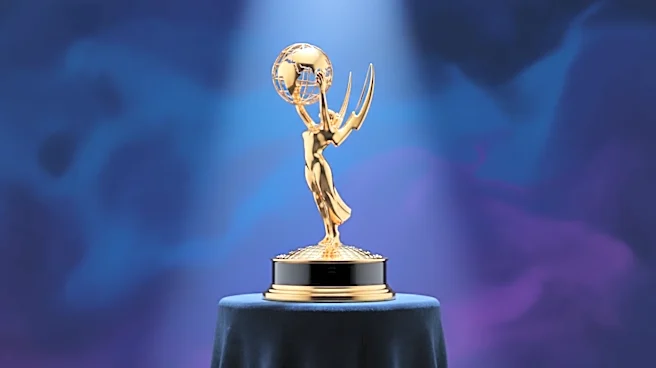
Not long ago, the path to an Emmy was straightforward: get your show on a major American broadcast network or a prestigious cable channel like HBO. The nominees for top awards like Outstanding Drama Series were a familiar roll call of U.S. productions.
Foreign shows, no matter how brilliant, were largely relegated to the separate International Emmy Awards, a ceremony with a much lower profile. This created a clear hierarchy where American-made television was, by default, the global standard-bearer for quality. The rules themselves reinforced this, often requiring a show to be produced in the U.S. to even qualify for the main event, leaving countless international hits on the outside looking in.
The Streaming Tsunami
Then came the streaming wars. Services like Netflix, Apple TV+, and Amazon Prime Video didn't just want to license content; they wanted to create it, everywhere. By investing billions in local-language productions across Europe, Asia, and Latin America, they built massive global libraries. This had a twofold effect. First, it made high-quality international shows instantly available to American Emmy voters. Second, it blurred the lines of what an "American" show even is. When a U.S.-based company like FX produces a series like "Shōgun" almost entirely in Japan with a predominantly Japanese cast, is it a foreign or domestic production? The streamers made that question both complicated and, ultimately, irrelevant. They're now full-blown Hollywood studios with a global footprint.
The 'Squid Game' and 'Shōgun' Effect
The dam truly broke with two landmark series. First, Netflix's South Korean sensation "Squid Game" became a cultural phenomenon and went on to make history at the Emmys. Its wins proved that a non-English language series could compete—and win—in the most prestigious categories. More recently, FX's "Shōgun" demolished any remaining barriers. The series, filmed largely in Japanese, was not just a critical darling but an Emmy powerhouse, securing a record-breaking 25 nominations in 2024 and winning 18 awards, including Outstanding Drama Series. Hiroyuki Sanada's win for Outstanding Lead Actor made him only the second Asian actor to be nominated in the category, following "Squid Game's" Lee Jung-jae. These shows weren't just token nominees; they were frontrunners that reset expectations.
Hollywood's New World Order
The success of globally-focused shows is reshaping Hollywood from the inside out. American audiences have shown they are more than willing to embrace subtitled content, a reality that was once considered a niche preference. This has opened the door for shows like Apple TV+'s trilingual epic "Pachinko," which, after being largely overlooked in its first season, has since earned major Emmy nominations for its craft and artistry. This shift is forcing a broader perspective. U.S. studios and networks now see the value in authentic, international storytelling, not just as a way to capture foreign markets, but as a way to create prestige television that resonates with American critics and audiences. The map isn't just being redrawn; it's being erased and replaced by a truly global landscape where the best show can come from anywhere.