





A City Dressed in Red
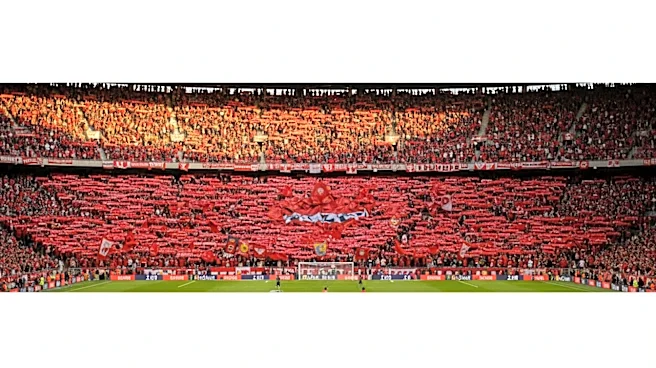
During a World Cup, major cities in South Korea undergo a stunning transformation. Plazas and boulevards, like Seoul's Gwanghwamun Square, become seas of crimson as millions gather for 'gilgeori eungwon,' or street cheering. This isn't a spontaneous outburst
but a highly organized, uniquely Korean phenomenon. Fans watch the matches on massive screens, their voices joined in perfectly synchronized chants that echo through the urban canyons. The architects of this spectacle are the 'Red Devils,' the official supporters' club for the national team. Far from the hooliganism sometimes associated with European fan groups, the Red Devils champion an orderly yet intensely passionate form of support, emphasizing unity and collective energy over confrontation. This culture of mass public gathering, which even inspired FIFA to create its official 'Fan Fest' program, turns spectating into a profound act of participation.
The Birth of the Devils
The Red Devils movement began in the mid-1990s, born from a desire to create a more organized and positive fan presence. The name itself dates back to 1983, when foreign media dubbed South Korea's tenacious youth team the 'Red Furies' or 'Red Devils'. The supporters' club officially adopted the moniker in 1997, embracing the fiery spirit it suggested. Their membership is open to anyone, and they choreograph the seemingly spontaneous waves of color and sound. Their signature chant, a rhythmic, five-beat cry of "Dae-han-min-guk!" (Republic of Korea!), punctuated by two sets of double claps, is a staple of any national team match. This simple but powerful cheer serves as a unifying call, a sonic heartbeat for the millions connected by a shared hope. The movement gained global attention during the 2002 FIFA World Cup, which South Korea co-hosted. The incredible fan support was widely seen as a 'twelfth player' on the field, helping propel the team to a historic semifinal finish.
A Reflection of Modern Korea
To understand the intensity of this fan culture, you have to look beyond the sport. For many South Koreans, the World Cup serves as a rare outlet for collective celebration and an expression of national pride on the global stage. The 2002 World Cup was particularly significant, as it occurred just a few years after the 1997 Asian financial crisis had deeply shaken the nation's confidence. The team's success, buoyed by the incredible public support, became a source of national healing and renewed self-esteem. The orderly, passionate, and clean gatherings—with fans often staying behind to clean up the streets—presented a specific, positive image to the world, countering older stereotypes. This collective effervescence, where strangers hug and cry together, speaks to a strong underlying sense of social unity that can be activated by major international events. It's a modern ritual that temporarily erases social divisions, uniting people under one color and one cheer.
More Than Just a Game
While American fan culture is often decentralized—loyalties divided among countless city and college teams—South Korea's soccer fandom during the World Cup is a singular, national force. It's a moment when the entire country rallies behind one team. This isn't to say club football is ignored, but the national team holds a unique emotional space in the public consciousness. The four-year cycle of the World Cup turns even casual viewers into passionate supporters, creating a temporary but intense national community. The phenomenon is less about the technical aspects of soccer and more about the shared experience of hope, anxiety, and potential triumph. It's a powerful demonstration of what a shared belief, even one centered on a 90-minute game, can achieve: a fleeting but powerful sense of perfect unity in a complex modern society.