










The Art of Moving Without the Ball
In soccer, a player is on the ball for an average of just a few minutes per game. The other 87-plus minutes are spent in constant motion: jogging, sprinting, and repositioning. This is the world of off-ball movement, a catch-all term for any run a player makes
when they don't have possession. It’s not just aimless running; it’s a tactical language. A striker might make a 'run in behind' the defense to create a goal-scoring opportunity for themselves. A midfielder might make a 'decoy run,' pulling defenders out of position to create space for a teammate. An overlapping fullback provides a wide passing option, stretching the opponent's defensive shape. For decades, this was considered part of a player’s innate 'soccer IQ'—impossible to quantify but obvious to the trained eye. That is, until now.
From 'Football IQ' to Hard Data
The analytics revolution that swept through sports like baseball and basketball was slower to take hold in soccer, partly because of the game's fluid, continuous nature. How do you assign a value to a run that doesn't result in a pass? Or credit a player for dragging a defender two yards to the left, which opened a lane for a game-winning assist? These actions were tactically vital but statistically invisible. Coaches and scouts praised players for their intelligent movement, but it was a subjective assessment. The new frontier of sports data aims to turn that subjective praise into objective, measurable data points, providing a common language to describe actions that were previously only felt.
How the Tech Actually Works
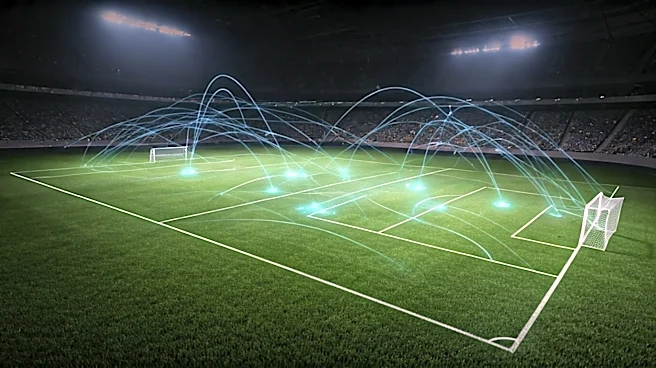
The secret lies in player tracking technology. Companies like Second Spectrum and TRACAB install arrays of high-tech cameras in stadiums that capture the coordinates of every player—and the ball—25 times per second. This firehose of data is then fed into machine learning and AI algorithms. These systems can automatically identify and classify different types of off-ball runs based on a player's speed, acceleration, and trajectory. Was it a 'run in behind' the defensive line? A 'cross receiver' run into the penalty box? Or a 'link-up' run to support a teammate? This technology, which is used by top leagues like the Premier League and MLS, turns the entire pitch into a live data-capture environment, logging every subtle movement and its potential impact.
The Impact on Coaching and Scouting
This data is transforming how clubs operate. For scouts, it's a goldmine for identifying undervalued talent. A player might not have flashy goal or assist numbers, but data can reveal they consistently make runs that create space and opportunities for others, making them a highly effective, if statistically quiet, contributor. For coaches, it provides a new set of tools for tactical planning and player development. They can analyze which types of runs are most effective against a particular opponent or design training drills to improve a player's off-ball awareness. Companies like SkillCorner provide platforms that allow analysts to filter players based on their run profiles—for instance, finding a striker who excels at making runs behind the defense—making recruitment more targeted and evidence-based than ever.