









The Stage: A Nation's Hopes at Wembley
The scene is London’s Wembley Stadium, July 30, 1966. England, the nation that invented the sport, is in its first and only World Cup final, playing on home soil against its fiercest rival, West Germany. The historical weight is immense. After 90 minutes,
the score is locked at 2-2. The match heads into a grueling 30 minutes of extra time, with 97,000 fans roaring and a television audience of 400 million hanging on every kick. This wasn’t just a game; it was a post-war cultural event, a moment of national destiny for an England team desperate to finally lift soccer’s ultimate prize.
The Moment: A Shot, a Crossbar, and Chaos
Eleven minutes into extra time, English forward Geoff Hurst controls a cross inside the German penalty area. He swivels and unleashes a thunderous right-footed shot. The ball rockets past the German goalkeeper, Hans Tilkowski, smacks the underside of the crossbar, and bounces violently down onto the goal line before being cleared away by a defender. English players wheel away in celebration, appealing for a goal. The Germans frantically wave their arms, insisting it never crossed the line. The stadium holds its breath. The fate of the World Cup hangs on a single, ambiguous bounce.
The Decision: A Referee and His Linesman
The Swiss referee, Gottfried Dienst, was unsure. He stopped play and sprinted towards his linesman, Tofiq Bahramov, who was patrolling the sideline. Bahramov, who hailed from Azerbaijan (then part of the Soviet Union), spoke no German or English. After a brief, confusing consultation consisting mostly of gestures, Bahramov nodded decisively. The ball had crossed the line. Goal. Dienst pointed to the center circle, awarding England a 3-2 lead. The German players were apoplectic. English fans were ecstatic. Bahramov, forever known in Germany as “the Russian linesman,” became an instant figure of both English folklore and German grievance.
The Modern Verdict: Can Science Settle It?
In the decades since, that moment has been subjected to the kind of forensic analysis usually reserved for a crime scene. Was it in or out? German fans have always claimed it was out, pointing to camera angles that suggest the ball didn't fully cross the line. English fans, naturally, insist it was in. In 1996, a study by Oxford University's engineering department used advanced imaging analysis and concluded the ball fell short, finding it was at least 6 centimeters shy of a goal. However, other digital reconstructions, including one by Sky Sports, have suggested the ball did, in fact, cross the line completely. The fact that even modern technology can’t provide a single, universally accepted answer is precisely why the argument has such incredible staying power.
Why It Endures: More Than Just a Goal
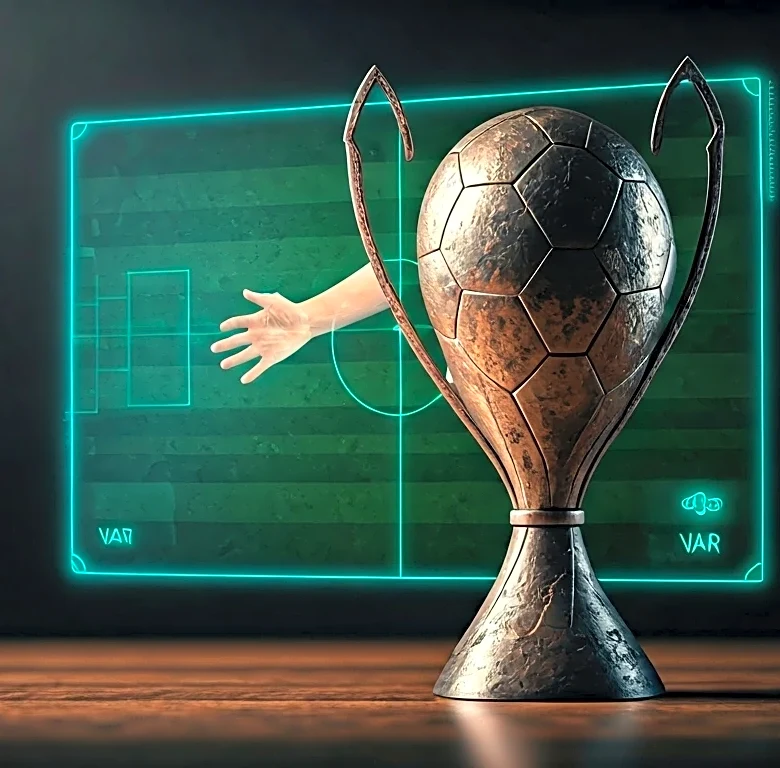
Geoff Hurst would go on to score again in the final minute, becoming the only man to score a hat-trick in a World Cup final as England won 4-2. But it’s his second goal, the “phantom goal,” that is immortal. Its controversy is what makes it special. It represents a bygone era of soccer, before goal-line technology and the Video Assistant Referee (VAR) could deliver a sterile, definitive verdict in seconds. For England, the goal is a sacred part of their lone sporting triumph, a moment where destiny, and a helpful linesman, were on their side. For Germany, it’s the ultimate “what if,” a legendary injustice that fueled a rivalry for generations. The debate doesn’t just persist because of the ambiguity; it persists because it’s a perfect symbol of fandom, national pride, and the beautifully imperfect, human element of the beautiful game.