




A Final Battle Against Time
An elite athlete’s career is a relentless fight against physical limits. For soccer legends in their late 30s or even early 40s, a final World Cup is the ultimate confrontation with the one opponent they can't outmaneuver: time itself. The 2026 World Cup has
a remarkable number of veteran stars, with a record eight players aged 40 or over participating. Players like Portugal's Cristiano Ronaldo, now 41, and Croatia's Luka Modrić, 40, are still central to their teams' hopes. Every match is a public display of their defiance. They may have lost a step of pace, but they compensate with unparalleled experience and intelligence. Modrić, for example, continues to dictate the midfield for Croatia, recently earning his 200th international cap and becoming the oldest player in World Cup history to record an assist. This last tournament isn't just about performing; it's a showcase of endurance and a final, poignant demonstration of greatness against the inevitable decline.
The Weight of a Nation's Narrative
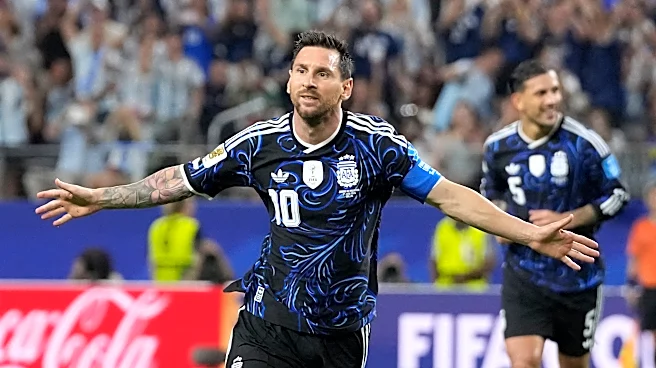
For many icons, a last cup is their final chance to fulfill a national destiny. The weight of millions of fans' hopes, built up over a decade or more, becomes immense. Before his 2022 victory, Lionel Messi carried the burden of Argentina's long wait for a World Cup, a pressure that was compared to the legacy of Diego Maradona. His eventual triumph in Qatar was seen as the completion of his career narrative, cementing his status as one of the greatest of all time. Now, at 39, he entered the 2026 tournament looking to defend the crown. Cristiano Ronaldo faces a similar trial. The World Cup is the one major trophy that has eluded him in an otherwise spectacular career. After a quiet opening match against DR Congo drew criticism, he responded by scoring against Uzbekistan to become the first player to score in six different World Cups. This final run is his last opportunity to deliver that ultimate prize for Portugal, and every moment is scrutinized.
The Trial of Legacy
Ultimately, the final tournament is a trial of legacy. It's where the last, and often most memorable, chapter is written. A strong performance can elevate a player's standing for eternity, while a failure can leave a permanent asterisk. Messi's 2022 victory is a perfect example; it silenced the remaining critiques of his career and fulfilled a national dream. For players like Luka Modrić, who led Croatia to a stunning final in 2018 and won the Ballon d'Or that year, this last tournament is about cementing his era and proving his small nation can once again challenge the world's giants. This month's knockout match between Portugal and Croatia is especially dramatic, as it could be the final World Cup game for either Ronaldo or Modrić. The stakes are not just advancing to the next round, but how their entire international careers will be remembered. This single match carries the weight of decades of performance.
The Final Verdict Is Personal
Beyond the fans, the media, and the history books, the last cup is a deeply personal test. It is about an internal battle for closure and self-worth. After years of relentless training and sacrifice, athletes want to end on their own terms, leaving nothing on the field. Sports psychology recognizes the immense pressure of these moments; the ability to manage anxiety, maintain focus, and embrace the challenge is what separates champions. For these legends, it’s a final chance to prove to themselves that they can still deliver when it matters most. It’s about more than winning another trophy; it’s about writing a satisfying final sentence to their own story. The desire is to walk off the field for the last time with no regrets, knowing they gave everything. This internal trial, this quest for a worthy ending, is the invisible engine driving them through one last, grueling campaign.