




Who's in Control? The Coach vs. The Invisible Booth
The most fundamental difference lies in who initiates the review. In the NFL, it’s an active, strategic choice. A head coach, believing the on-field officials made a mistake, throws a red flag. It’s a gamble. They have a limited number of challenges,
and if they’re wrong, they lose a valuable timeout. This puts the power—and the risk—in the hands of the teams. It becomes part of the game’s tactical landscape, a weapon to be deployed wisely. Video Assistant Referee (VAR) in soccer is the opposite. It’s a passive, top-down system. A team of officials in a remote booth constantly monitors the game, and they are the only ones who can initiate a review for potential "clear and obvious errors" on major decisions like goals, penalties, and red cards. The coaches and players have no say. The game is interrupted not by a strategic choice, but by an unseen force, making fans feel like the match is being audited by an outside agency rather than officiated on the field.
The Burden of Proof: 'Indisputable' vs. 'Clear and Obvious'
Language matters, and the standards for overturning a call create vastly different experiences. The NFL’s standard is “indisputable visual evidence.” This is a high bar. The replay must show something so definitive that there is no other reasonable conclusion. It’s designed to correct blatant, objective mistakes, not to re-referee plays that are matters of inches or interpretation. While fans might disagree, the goal is clarity and certainty. Soccer’s VAR operates on a murkier standard: “clear and obvious error.” This sounds straightforward but is intensely subjective. What’s “obvious” to one official might be a 50/50 call to another. This leads to agonizingly long reviews where officials seem to be searching for a reason to intervene, sometimes freezing frames and drawing lines on the screen to find a millimeter of an offside violation that no one saw in real-time. Instead of correcting glaring mistakes, it often feels like it's hunting for imperfections, creating more debate rather than resolving it.
Communication and Theatrics: The Ref's Announcement vs. The Silent Wait
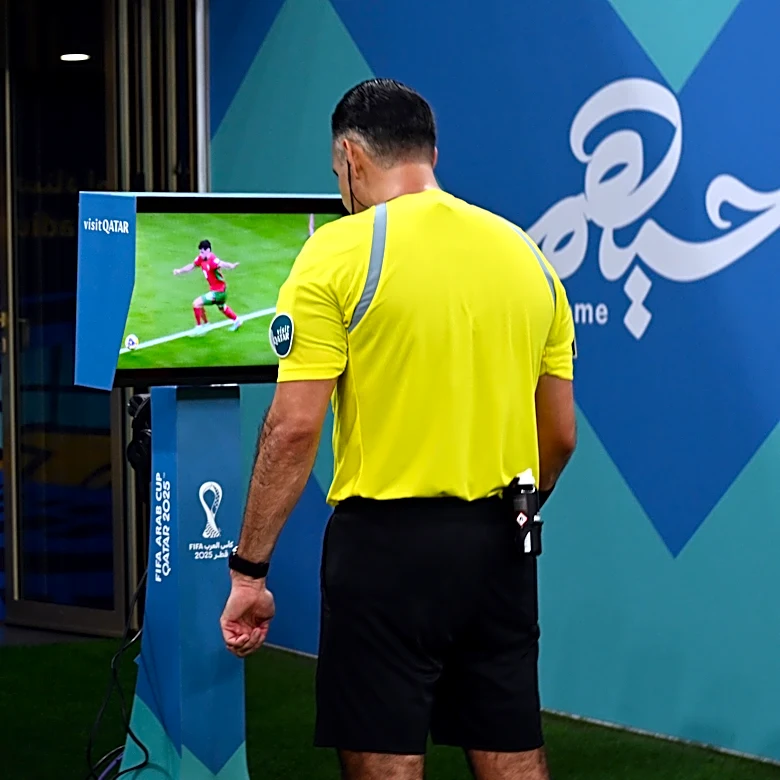
How a decision is delivered shapes the entire fan experience. In the NFL, there's a degree of public accountability. The referee goes under the hood, confers with the replay official, and then walks to the middle of the field. He turns on his microphone and announces the outcome to the entire stadium and television audience: “After reviewing the play, the ruling on the field stands.” It’s a moment of theater and, crucially, a moment of resolution. You know what happened and why. VAR, by contrast, is often a cone of silence. The play stops, the referee puts a finger to his ear, and players stand around in confusion. The broadcast might show replays, but there is no official communication. Fans in the stadium are left completely in the dark, staring at a static screen or the confused players. Even when the referee goes to the pitch-side monitor, the process feels secretive. The final signal is often just a hand gesture, leaving fans to piece together what just happened. This lack of transparency breeds frustration and suspicion.
Pacing and Momentum: A Rhythmic Pause vs. A Sudden Halt
Finally, there’s the impact on the flow of the game. American football is a sport of starts and stops. Huddles, timeouts, and changes of possession are built into its DNA. A coach’s challenge, while a delay, fits within this established rhythm. It’s a formal pause in a game full of them. Soccer, however, is defined by its continuous flow. The clock never stops, and momentum is everything. A goal can swing the emotional energy of a 90-minute match in an instant. VAR interrupts this flow at the most dramatic moments. A team scores a euphoric goal, players celebrate, the crowd erupts—only for everyone to wait two minutes while officials in a dark room decide if a player’s kneecap was an inch offside a half-minute earlier. It retroactively kills the joy and inserts a jarring, clinical pause into a sport built on passion and unbroken rhythm.