








The Age of Graphic Rebellion
Before the 1990s, soccer jerseys were, for the most part, utilitarian. They were simple, single-color affairs with a team crest and a number. But the '90s, fueled by new manufacturing techniques like sublimation printing, blew the doors wide open. Suddenly,
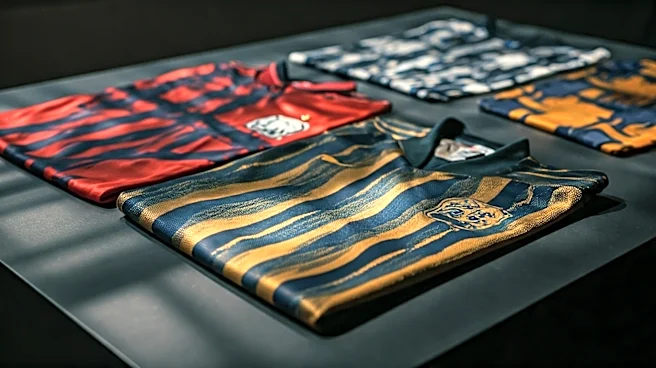
the fabric of a jersey wasn't just a piece of polyester; it was a canvas. Designers at brands like Adidas, Umbro, and Lotto were unleashed, transforming team kits from athletic uniforms into wearable art. This era traded quiet tradition for loud, expressive, and sometimes downright bizarre patterns. It was a time of creative risk-taking, where a team’s identity could be expressed not just by its crest, but by a jagged pattern meant to evoke a thunderbolt or a wild texture that looked like it was pulled from a fever dream.
The Unforgettable Icons
This creative explosion produced a hall of fame of iconic kits that are still revered today. You can’t talk about '90s jerseys without mentioning the U.S. Men's National Team’s 1994 World Cup away kit—the infamous “denim stars” jersey. Was it beautiful? Was it a crime against fashion? That’s still up for debate, but it was undeniably memorable. There was also West Germany’s 1990 World Cup winning jersey, a masterpiece of geometric design featuring the colors of the German flag in a dynamic shard pattern across the chest. In England, Arsenal’s 1991-93 “bruised banana” away kit became a cult classic, while Manchester United’s black kit with the sharp blue collar, worn by Eric Cantona, became a symbol of cool defiance. These weren't just shirts; they were cultural artifacts tied to specific moments, players, and glorious victories (or agonizing defeats).
From Pitch to Pop Culture
The '90s was also the decade when the lines between sports, music, and fashion blurred irrevocably. In the UK, the Britpop movement saw bands like Oasis and Blur adopting the casual sportswear look, pairing track jackets and vintage jerseys with jeans. The soccer jersey became part of a subcultural uniform. Simultaneously, players were becoming global superstars in a way they never had before. David Beckham wasn't just a footballer; he was a style icon. Roberto Baggio’s divine ponytail and Diadora gear were as much a part of his brand as his penalties. The jersey stepped off the pitch and into music videos, video games, and everyday street style. It stopped being something you only wore to the stadium and became a way to signal your taste, your allegiance, and your connection to a global game.
The Long Echo of the '90s
So why the massive resurgence now? It’s a perfect storm of cultural trends. First, there's the unstoppable 20-to-30-year nostalgia cycle. The kids who grew up idolizing players in these wild kits are now adults with disposable income, eager to reclaim a piece of their youth. Second, the baggy, oversized fit of '90s jerseys aligns perfectly with modern streetwear aesthetics, offering a comfortable, gender-neutral silhouette that stands in stark contrast to the skin-tight, performance-optimized kits of the 2010s. Finally, in a world dominated by fast fashion and minimalist design, these vintage pieces feel authentic. They have a story. They’re loud, unique, and unapologetic. Brands have taken notice, with clubs frequently releasing retro-inspired kits or full-blown remakes that sell out instantly, proving the appetite for this aesthetic is stronger than ever.