



Embrace the Capsule Wardrobe
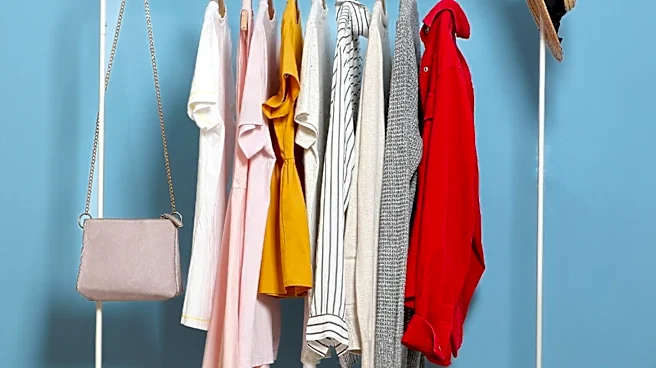
The capsule wardrobe is less about subtraction and more about strategic curation. The goal is to build a small, intentional collection of versatile, high-quality items that you love and that all work together. This usually involves selecting a limited
number of pieces—often between 30 and 40—to wear for a specific season. By focusing on quality over quantity and creating a collection where every top matches every bottom, you eliminate decision fatigue. Getting dressed becomes faster and more enjoyable because you're only choosing from your favorite, most flattering pieces. It’s a shift from a closet full of clothes to a wardrobe full of outfits.
Try a Temporary Shopping Freeze
Sometimes the best way to appreciate what you have is to stop adding to it. Enter the shopping freeze, famously embodied by 'Project 333'. The challenge is simple: choose 33 items from your wardrobe—including clothes, shoes, and accessories—and wear only those items for three months. Everything else gets stored away, out of sight. This isn’t about deprivation; it's an experiment in creativity. It forces you to rediscover old favorites, get creative with styling, and break the cycle of impulse shopping. Many find that after a few weeks, the desire for newness fades, replaced by a deeper appreciation for the clothes they already own.
Let Your Closet Be the Container
If rules feel restrictive, let your physical space set the limit. This is the 'Container Concept,' an idea popularized by author Dana K. White. Your closet, your dresser, and your drawers are all containers with a finite capacity. The rule is simple: you can keep whatever fits comfortably inside its designated container. When a drawer is full, it’s full. To add something new, something else must be removed to make space. This method turns decluttering from an emotional debate ('Should I keep this?') into a practical, visual exercise. By respecting the physical boundaries of your space, you create a natural, ongoing editing process without needing to count every item.
Calculate the 'Cost-Per-Wear'
This method reframes your wardrobe through a financial and value-based lens. The cost-per-wear (CPW) is calculated by dividing an item's price by the number of times you've worn it. A $200 coat worn 100 times has a CPW of $2, making it a better 'investment' than a $40 fast-fashion top worn only twice (a CPW of $20). Thinking in these terms encourages you to invest in higher-quality, more durable, and more versatile pieces that you’ll wear for years, rather than succumbing to fleeting trends. This not only saves you money in the long run but also promotes a more sustainable approach to fashion by prioritizing longevity and reducing waste.
Schedule a Seasonal Edit
Instead of constant, low-level maintenance, this approach consolidates your decluttering efforts into a few focused sessions per year. The changing of the seasons provides a natural opportunity to reassess your wardrobe. As you pack away your winter coats or pull out your summer dresses, take the time to do a full-scale review. Ask yourself what you actually wore in the season that just ended. If an item sat untouched for months, that’s a strong signal it might be time to let it go. This cyclical process feels less like a daily chore and more like a periodic refresh, ensuring your closet remains relevant to your current life and style without demanding constant vigilance.