



The Source Awards: Raw, Real, and Revolutionary
Before the glossy, televised productions we know today, there were The Source Awards. In the mid-90s, The Source magazine was considered the “bible of hip-hop,” and its awards show was an unfiltered reflection of the culture. The 1995 show, in particular,
is a watershed moment in rap history. It was raw, chaotic, and brimming with tension, capturing the escalating East Coast vs. West Coast rivalry in real time. When Suge Knight took the stage and publicly slighted Bad Boy Records executive producer Sean “Puffy” Combs, the fault line was drawn. Later, when OutKast was booed while accepting an award, André 3000’s defiant declaration, “The South got something to say,” became a prophecy. The Source Awards weren’t about polished nostalgia; they were a live-action document of hip-hop’s volatile, competitive present.
VH1's Hip Hop Honors: Building the Canon
By the early 2000s, hip-hop was a commercial juggernaut, yet its history was often overlooked by mainstream institutions. Enter VH1’s Hip Hop Honors, which launched in 2004. This was the first major televised event designed specifically to canonize the genre's founding fathers and mothers. Instead of focusing on current chart-toppers, the show honored pioneers like Run-DMC, Public Enemy, Kool Herc, and Tupac Shakur. The format was a masterstroke in curated nostalgia: contemporary artists influenced by the legends would perform tribute sets, bridging generational divides. It treated hip-hop history with the reverence of a Rock & Roll Hall of Fame induction, telling a wide audience that these artists weren't just hitmakers, but architects of a global culture. The show ran consistently until 2010 before returning for special events, including a 2016 show honoring the women of hip-hop.
The BET Hip Hop Awards: Celebrating the Now, Creating the Future
Launched in 2006, the BET Hip Hop Awards took a different approach. While the main BET Awards covered Black entertainment broadly, this spinoff was a dedicated space for the mechanics of rap: lyricism, production, and direction. Its primary focus was celebrating the present, crowning the year’s biggest artists and moments. But its most enduring contribution to hip-hop nostalgia is an institution it created: the cypher. These pre-recorded, multi-rapper freestyle sessions became appointment television, sparking endless debate. The cyphers created their own history, from the G.O.O.D. Music crew’s all-black-suit affair in 2010 to Kendrick Lamar’s incendiary verse in the 2013 TDE cypher that unofficially kicked off his rivalry with Drake. The show also featured the “I Am Hip Hop” award, its own nod to legacy, honoring legends like MC Lyte and Snoop Dogg. While VH1 looked back, BET created new historical markers.
Modern Nostalgia: An On-Demand Experience
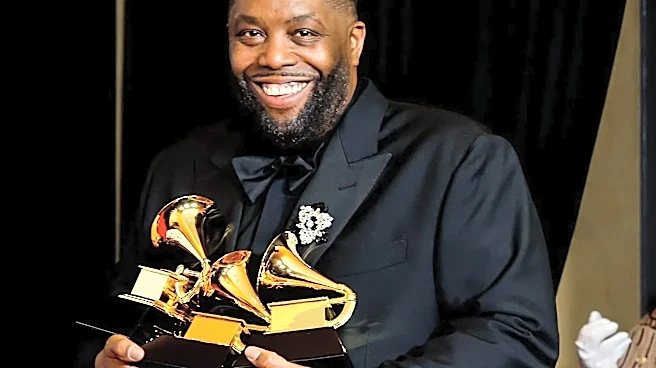
Today, the role of a singular awards show has shifted. The BET Hip Hop Awards were paused in 2025 to be “reimagined” for a new media landscape, a move reflecting how audiences now consume culture. Nostalgia is no longer a once-a-year event; it’s an on-demand commodity served daily through streaming playlists, documentaries, and social media trends. The Grammy Awards, which famously snubbed hip-hop in its early days, finally gave the genre its due with a sweeping 50th-anniversary tribute in 2023 curated by Questlove. This signaled a full-circle moment: the institution that once forced hip-hop to build its own platforms of recognition was now borrowing their format. The ceremonies that once had to fight for legitimacy have seen their mission absorbed into the fabric of the culture itself, proving that hip-hop’s greatest honor has always been its own enduring influence.