






More Than Just Team Colors
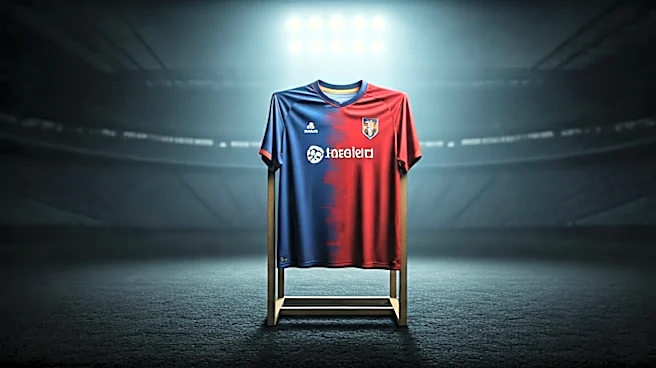
On the surface, a soccer jersey—or “kit,” in global parlance—is simple. It’s how you distinguish one team from another on the pitch. But for a national team, that function is almost secondary. The jersey isn't just distinguishing players; it’s representing
an entire country’s hopes, history, and collective soul. When you see the sky blue and white stripes of Argentina, you’re not just seeing a uniform; you’re seeing the legacy of Maradona and Messi. The vibrant Oranje of the Netherlands isn't even on their national flag; it’s the color of their royal house, a symbol of national pride so deep it transcends civic iconography. This simple garment becomes the most visible and democratic expression of national identity. You don’t need to be a citizen or live within the borders to wear the shirt. You just need to feel the connection.
A Wearable History Book
Many of the most iconic jerseys are steeped in stories that go far beyond soccer. Brazil’s legendary canary yellow shirt, for example, was born from national trauma. After losing the 1950 World Cup final at home in a national tragedy known as the *Maracanazo*, the country’s all-white kit was deemed cursed. A newspaper held a competition to design a new one that incorporated the colors of the Brazilian flag. The winning design—a yellow shirt with green trim, blue shorts, and white socks—became synonymous with a new era of joyous, dominant football, a symbol of resilience and rebirth. Similarly, Croatia's red-and-white checkerboard pattern, the *šahovnica*, is a direct lift from its coat of arms. When the team debuted it in the 1990s after the country gained independence, the jersey was a powerful statement of sovereignty on the world stage. It was a new nation announcing its arrival, not just in politics, but in the global language of sport.
The Diaspora's Flag
Nowhere is the power of the jersey more visible than in the diaspora communities across the United States. During a World Cup summer, American cities transform. Suddenly, you see the green, white, and red of Mexico in Los Angeles, the deep blue of Italy's *Azzurri* in Brooklyn, or the vibrant green of Nigeria's kit in Houston. For first-generation Americans or children of immigrants, the jersey is a bridge. It’s a connection to a heritage that can feel distant, a public declaration of a private identity. It allows someone who has never lived in their parents’ home country to feel a profound sense of belonging. It says, “This is part of my story.” It’s a conversation starter at a bar, a nod of recognition on the subway, and a uniform for a temporary tribe that gathers every four years to celebrate where they came from.
A Canvas for Culture and Conscience
In recent years, the jersey has also evolved into a platform for social and political statements. Teams and designers are increasingly aware of the shirt’s power as a message board. Denmark’s “toned down” all-red and all-black kits for the 2022 World Cup in Qatar were a quiet but potent protest against the host nation’s human rights record, with the manufacturer stating they didn't “wish to be visible during a tournament that has cost thousands of people their lives.” On a fan level, certain jerseys have become fashion statements, with designs like Nigeria's 2018 kit selling out globally and becoming a streetwear phenomenon. This intersection of sport, style, and conscience proves the jersey is not a static object. It’s a dynamic piece of culture that reflects the values—and the conflicts—of the moment.