

A 'Dolly' for a New Era
By 1967, the musical 'Hello, Dolly!' was a certified Broadway smash, but its initial fire was beginning to fade. In a stroke of genius, producer David Merrick decided to revitalize the show by recasting it entirely with Black performers, a bold and controversial
move for the time. Tapped for the lead role of the indomitable matchmaker Dolly Gallagher Levi was the one and only Pearl Bailey, with the charismatic Cab Calloway starring opposite her. The production was an immediate sensation, breathing new life into the musical and earning rave reviews. Bailey, in particular, was a force of nature. The New York Times declared her performance "a Broadway triumph for the history books," noting how she took the entire show "in her hands and swung it around her neck as easily as if it were a feather boa." The show's success was so profound that it attracted President Lyndon B. Johnson, who made a historic appearance on stage with the cast.
The Confrontation Over the Cast Album
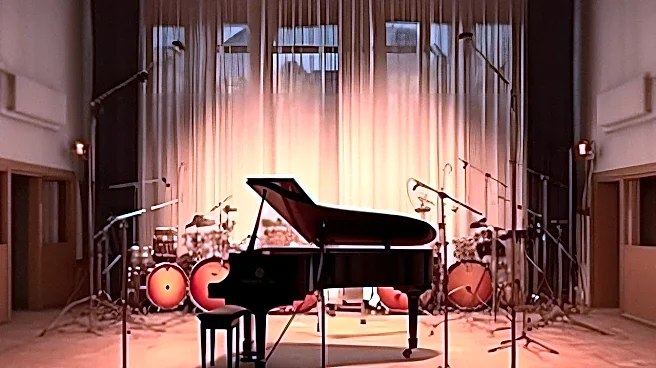
With the show's runaway success, a new cast album was a foregone conclusion. RCA Victor booked studio time to capture the magic of Bailey's company. However, during the session, producer David Merrick made a decision that clashed with Bailey's deep-seated principles. To save time and money, Merrick ordered that a small singing part—a reprise by a minor character—be cut from the recording. For Bailey, this was not a minor edit; it was an act of disrespect toward a fellow performer. She saw it as diminishing the work of a cast member for commercial expediency, a compromise she was unwilling to make. The album, in her view, was meant to be a faithful document of the show they all performed together on stage each night, not an edited-down version.
A Stand for Solidarity
What happened next became the stuff of Broadway legend. Upon hearing of the cut, Bailey refused to continue. She wasn't just protesting for herself; she was standing up for the entire cast, particularly the actor whose part was on the chopping block. Accounts from the session describe a powerful moment of conviction. She reportedly told the powerful Merrick where he could go and, in an extraordinary act of solidarity, walked out of the recording studio. She didn't go alone. The entire cast of 'Hello, Dolly!' followed her out the door, leaving the producer and engineers in a state of shock. Her message was clear: you don't disrespect one member of the company. You don't diminish someone's contribution. They were a team, and they would be treated as one, or not at all.
The Principle That Won
Faced with a full-scale mutiny led by his megastar, David Merrick had no choice but to back down. He conceded to Bailey's demand, and the recording session resumed with every part, no matter how small, intact. The resulting cast album for the all-Black production of 'Hello, Dolly!' was released in 1967, complete with the very music that sparked the confrontation. This moment did more than just preserve a few bars of music; it solidified Pearl Bailey’s legacy not only as a transcendent performer but as a fierce advocate for her fellow artists. Her career was filled with accolades—a special Tony Award for this very role, the Presidential Medal of Freedom, and status as a U.N. Goodwill Ambassador—but this quiet act of defiance in a recording studio remains one of the most powerful testaments to her character. It was a walkout that affirmed her belief in dignity, respect, and the indivisible spirit of a theatrical company.