



Your Body Isn’t Your Face
The most fundamental reason for a different prep routine is that the skin on your body is not the same as the skin on your face. Facial skin is thinner, more delicate, and has a higher concentration of oil glands, which is why facial skincare focuses
on balancing oil and addressing fine lines. Body skin, in contrast, is thicker and more resilient. It has fewer oil glands, making it more susceptible to dryness, rough patches, and conditions like keratosis pilaris. Areas like knees, elbows, and ankles are particularly prone to texture and darkness, requiring a targeted approach that facial products aren't designed to handle.
The Red Carpet Gauntlet
Body makeup faces a unique set of challenges that facial makeup rarely encounters. It covers a much larger surface area and is in constant contact with clothing. For an event like the BET Awards, that means a product must be completely transfer-resistant to avoid ruining a designer gown. It also needs to be sweat-proof and water-resistant to withstand hours under hot lights and the stress of a live event. High-definition cameras will pick up any unevenness, streaks, or patchiness, so the application must be seamless across broad areas like the legs, décolletage, and back. It's a high-stakes environment where makeup failure is not an option.
The Prep-Step Playbook
For body makeup to look like a second skin, preparation is paramount, and it starts well before application. The first and most crucial step is exfoliation. Using a body scrub, exfoliating mitt, or dry brush buffs away dead skin cells that cause patchiness and creates a perfectly smooth canvas. This should be done a day in advance to avoid irritation. The next step is hydration, but not with the heavy creams you might use at night. Celebrity makeup artists recommend a lightweight, fast-absorbing moisturizer. It’s essential to allow the moisturizer to sink in completely before applying any makeup to prevent pilling and ensure the product adheres properly to the skin.
Application is an Art Form
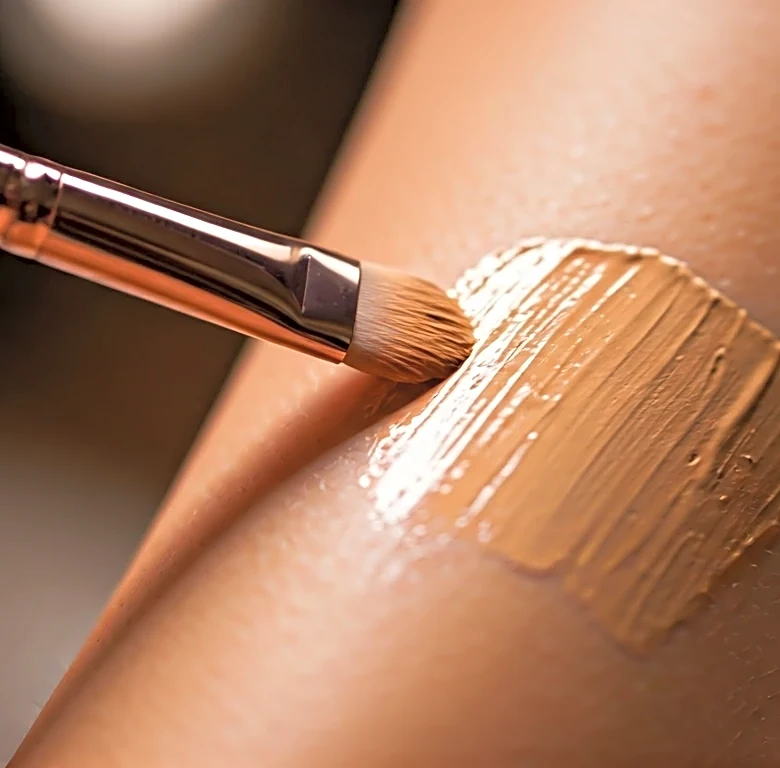
You can’t apply body makeup with a tiny beauty blender. Pros use large, dense kabuki brushes or buffing mitts to apply product quickly and evenly over large areas. The key is to build coverage in thin, sheer layers rather than applying one thick coat. Many artists start with a base layer of a product like MAC Face & Body or Sally Hansen Airbrush Legs to even out skin tone. They then blend meticulously, paying extra attention to areas that bend, like knees and ankles. For longer wear, a generous dusting of translucent setting powder is often applied and then brushed off after a few minutes, locking the makeup in place and creating a durable, transfer-proof finish.
Adding That Signature Glow
The final touch that creates that iconic red-carpet radiance is strategic highlighting. However, unlike facial highlighting, body glow requires a different approach. Makeup artists advise against applying shimmer directly to areas with texture. Instead, they apply a liquid or cream illuminator to high points where light naturally hits, such as the collarbones, the fronts of the shins, and the tops of the shoulders. This creates a beautiful sheen that enhances contours and gives the skin a luminous, healthy-looking finish that glows under the camera flashes. This final step is what elevates a look from simply covered to truly flawless.