


The Unseen Gatekeepers of Fear
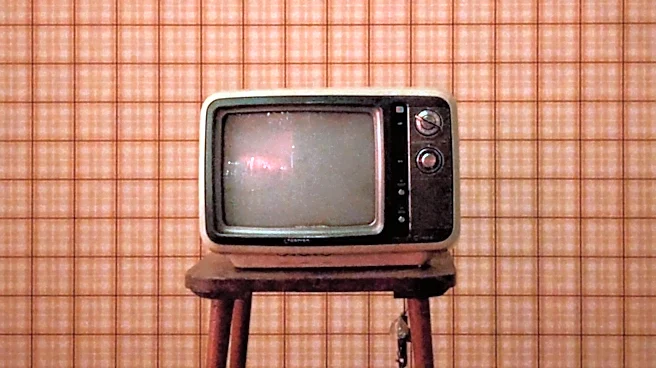
Before you could stream virtually anything, three or four major networks ruled the airwaves. Their content was beamed directly into American homes, and with that access came a heavy sense of responsibility—and fear of backlash. To protect themselves from
advertiser boycotts, viewer complaints, and potential government fines, networks created Standards and Practices (S&P) departments. These were the internal censors, tasked with reviewing every script, joke, and scene for compliance with company policy and perceived community standards. Their primary goal wasn't to stifle art but to manage risk. For decades, S&P had the final say on what was considered acceptable for a mass audience that included children, meaning they were the ghost in the machine of every spooky television event.
The Rules of the Scare
When it came to horror, S&P had a specific, if unwritten, rulebook. Explicit gore was an absolute non-starter. You couldn't show blood in graphic detail, and scenes of intense physical suffering were heavily scrutinized. Depictions of the occult were permissible as long as they weren't instructional; a séance couldn't look like a how-to guide. Writers had to be especially careful with child characters, who could be placed in jeopardy but rarely shown in moments of extreme, realistic terror. Unique or easily replicable methods of violence were also forbidden to prevent copycat behavior. Essentially, the networks operated on a principle of suggestion over depiction. The horror had to be psychological, playing on atmosphere and tension rather than visceral shock.
Creativity Through Constraint
These limitations, however frustrating for creators, inadvertently fostered a golden age of creative horror. Directors couldn't rely on cheap jump scares or buckets of blood, so they had to be smarter. They used shadows, unsettling sound design, and psychological ambiguity to build dread. Think of the most memorable episodes of "The Twilight Zone," where the horror is almost entirely conceptual. Or consider the legendary 1975 made-for-TV movie "Trilogy of Terror." The final segment, "Amelia," features a woman terrorized in her apartment by a small Zuni fetish doll. Director Dan Curtis couldn't show the doll graphically dismembering its victim. Instead, he used frantic close-ups, the doll's terrifying shrieks, and actress Karen Black's harrowing performance to create a suffocating sense of panic that traumatized a generation of viewers. The horror was implied, leaving the worst details to the audience's imagination.
Halloween Specials on a Leash
This philosophy extended to the annual animated Halloween specials that became cultural traditions. In "It's the Great Pumpkin, Charlie Brown," the spookiness is gentle and melancholic, centered on belief and disappointment rather than genuine threat. Disney's Halloween specials often repurposed spooky, but not terrifying, segments from their classic animated films, framed by a celebrity host to soften the mood. The monsters were goofy, the ghosts were friendly, and the narrative always returned to a safe, happy resolution. The S&P mandate for children's programming was clear: you could be seasonally spooky, but you couldn't be truly scary. The goal was to create a sense of festive fun, not to give kids actual nightmares.
The Fading of the Censor's Pen
The iron grip of the network S&P departments began to loosen with the rise of cable television in the 1980s and the explosion of streaming services decades later. Channels like HBO weren't bound by the same advertiser-driven rules, and streaming platforms operated outside the FCC's purview entirely. This new landscape, combined with the adoption of content rating systems like the V-chip, shifted the responsibility from the broadcaster to the viewer. Shows like "The X-Files" in the 90s began to push the boundaries of what was acceptable on network TV, with episodes like "Home" being so disturbing it was banned from reruns for years. Today, series like "American Horror Story" or "The Walking Dead" showcase graphic horror that would have been unthinkable on CBS or ABC in 1975. The old gatekeepers have largely been replaced by parental controls and a la carte content choices.