





The Shockwave in the Dolby Theatre
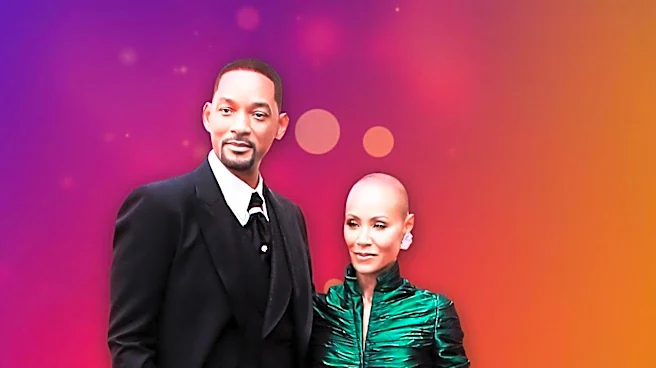
You know the scene. Chris Rock makes a joke about Jada Pinkett Smith. Will Smith, her husband and the frontrunner for Best Actor, walks on stage, slaps the comedian, returns to his seat, and yells, “Keep my wife's name out your f---ing mouth.” In the minutes
that followed, the global telecast descended into chaos. Producers and Academy officials scrambled backstage, unsure how to respond. Smith remained in his seat and, shortly after, accepted the Best Actor award for his role in King Richard. The institutional paralysis was stark; the organization’s response was widely seen as inadequate. In the immediate aftermath, polling showed Smith's once-unassailable popularity took a significant dive, and the incident became one of the most talked-about news events of the year, eclipsing even major global crises in public awareness. The Academy, facing a full-blown crisis, knew it couldn't be business as usual.
New Rules for a New Reality
The most direct consequence was a top-down overhaul of how the ceremony is run. Recognizing its failure to act swiftly, the Academy made concrete changes. CEO Bill Kramer, who took the helm after the incident, announced the formation of a dedicated “crisis team” for all future ceremonies. This unit, a first in the Oscars' long history, was designed to handle unforeseen events in real time. The goal was to be “prepared for anything,” after 2022 “opened our minds to the many things that can happen,” Kramer explained. The Academy also took punitive action, banning Will Smith from attending the Oscars or any other Academy events for ten years. This new, more proactive stance was a clear signal that the era of letting on-stage chaos play out was over. The focus shifted from merely celebrating film to actively managing and protecting the Academy's brand during its biggest night.
Did It Actually Change the Vote?
The headline's central question is whether this firestorm reshaped voting. The evidence here is more nuanced. The year after the slap, the big winner was Everything Everywhere All at Once, a wildly unconventional, chaotic, and decidedly anti-establishment film. This result would seem to argue against the theory that voters retreated to safer, more traditional choices. However, the ceremonies themselves became noticeably more controlled. The 2023 and 2024 Oscars, both hosted by the reliable Jimmy Kimmel, were praised for being smooth, professional, and largely devoid of controversy. The 2024 Best Picture winner, Oppenheimer, was a more classical, epic biopic—a 'safer' choice in the eyes of many. The truth seems to be that while the slap didn't trigger a simple pivot to conservative taste, it did instill a deep desire for institutional stability. Voters might still reward bold films, but the organization itself would no longer tolerate a volatile live show.
The Broader Institutional Shift
The slap acted as a catalyst for an Academy already in flux. Under CEO Bill Kramer, the organization has accelerated its push for globalization and diversification, continuing efforts that began long before 2022. In the years since, the Academy has continued to refine its rules, but the focus has been on broader industry trends, not just crisis management. For the 99th Academy Awards, new rules were introduced to address the use of generative AI in films, requiring that acting and writing awards go to achievements with clear human authorship. Other changes expanded eligibility for international films and allowed actors to receive multiple nominations in the same category. These moves show an institution grappling with its place in a changing media landscape, a process that the shock of 2022 undeniably accelerated. The slap forced the Academy to look hard in the mirror, and the reflection prompted changes far beyond just how to handle an on-stage incident.