
The Appeal of the Statement Buckle
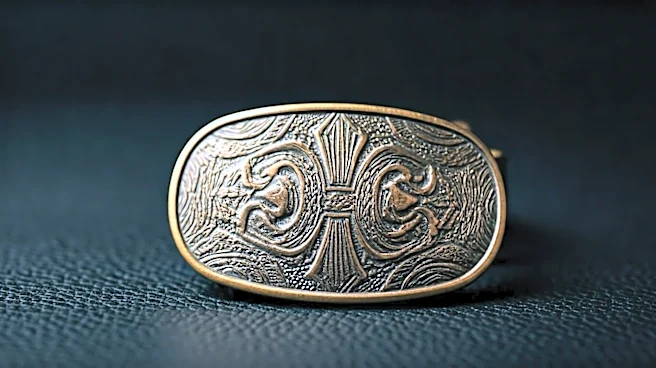
Before we dissect the mistake, let's appreciate the appeal. An oversized buckle is more than just a fastener; it’s a centerpiece. It can signal a connection to Western heritage, a nod to Y2K-era nostalgia,
or simply an unapologetic, confident style. Whether it's an engraved silver plate reminiscent of a rodeo champion or a sleek, minimalist brass rectangle, a large buckle has the power to transform a simple outfit—like a white tee and jeans—into a deliberate, memorable look. It’s an instant focal point, drawing the eye and adding a layer of personality that few other accessories can match. This is precisely why getting it right is so important; when it works, it really works.
The Core Mistake: Creating an Imbalance
The mistake isn't wearing a big buckle. The mistake is letting the buckle wear you. This happens when the accessory’s scale is completely out of sync with your body and the rest of your outfit. Think of your look as a composition. A good composition has a clear focal point, but all the other elements are in harmony. When a buckle is too large for your frame or paired with an already “busy” outfit, it doesn't create a focal point—it creates a distraction. It visually breaks the line of your body and can make an otherwise well-put-together look feel accidental or even comical. The goal is to look intentional, and ignoring scale is the quickest way to undermine that intention.
Guideline 1: Sync the Buckle to Your Body Frame
The most fundamental rule of scale is matching the accessory to the wearer. A person with a broader, taller frame can naturally handle a larger, more substantial buckle without it looking overwhelming. The accessory is proportional to the canvas. Conversely, on a more petite or slender frame, a truly massive buckle can look disproportionate, visually cutting the body in half. This doesn't mean smaller individuals can't wear statement buckles. It simply means your version of “oversized” should be relative. Look for buckles that are bold but don't extend past the width of your own torso or feel comically heavy. Try on different sizes and trust your eye in a full-length mirror. If your first thought is “wow, that’s a buckle” instead of “wow, I look great,” it might be too big.
Guideline 2: Let the Buckle Be the Star
An oversized buckle is the lead singer of your outfit. It cannot share the stage with a flashy backup band. To maintain balance, the rest of your outfit should play a supporting role. Pair your statement buckle with simple, solid-colored pieces. A classic pair of blue or black jeans, clean-lined trousers, or a simple dress are perfect backdrops. Avoid pairing a large buckle with loud patterns, graphic tees, or other statement accessories around your midsection. If your buckle is intricate and ornate, keep your shirt, pants, and shoes as minimal as possible. This allows the buckle to do its job as a focal point without competing for attention, resulting in a look that feels confident and curated.
Guideline 3: Pay Attention to the Belt Strap
The buckle is only half of the equation; the belt itself is just as important. A common error is putting a massive buckle on a skinny, flimsy belt strap. The visual effect is jarring and looks structurally unsound, as if the buckle is about to overwhelm and break the leather. The width of the belt strap should be proportional to the buckle. A substantial buckle requires a substantial belt—typically one that is 1.5 inches wide or more. The strap provides the necessary visual foundation, creating a cohesive and balanced unit. The material and color matter, too. A rugged, tooled silver buckle looks right at home on a thick, dark brown leather strap, while a modern, polished gold buckle might pair better with a sleek black belt.