



1. Schiaparelli: The Artistic Provocateur
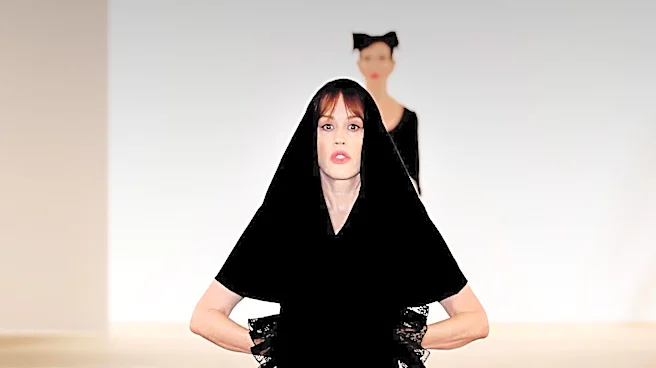
While Lanvin was the epitome of romantic elegance, Elsa Schiaparelli was her audacious contemporary and rival. If Lanvin represents the heart, Schiaparelli is the brilliantly unconventional mind. A fellow female founder who dominated Parisian couture,
Schiaparelli collaborated with Surrealist artists like Salvador Dalí to create witty, shocking, and truly avant-garde fashion. Her infamous "Lobster Dress" and "Shoe Hat" are legendary. Like Lanvin, she was a woman who built a globally recognized brand from scratch in a male-dominated world, but her aesthetic provides a thrilling counterpoint—proving there was more than one way for a woman to define 20th-century style.
2. Madeleine Vionnet: The Architect of Fabric
Few designers have influenced the technical craft of fashion more than Madeleine Vionnet. A contemporary of Lanvin, Vionnet is credited with perfecting and popularizing the bias cut—a technique of cutting fabric on the diagonal grain that allows it to cling and drape fluidly over the body. This innovation created a new, liquid silhouette that liberated women from rigid corsetry, much as Lanvin’s flowing 'robes de style' offered a more romantic freedom. For those who admire Lanvin's mastery of silhouette and graceful lines, Vionnet is the essential next chapter, a true genius whose work was all about the beautiful relationship between fabric and the female form.
3. Patou: The Pioneer of Sportswear and Scent
Jean Patou was another giant of the 1920s who, like Lanvin, understood that a modern fashion house was a lifestyle brand. He is often credited with inventing designer sportswear, creating chic, comfortable clothing for the newly active woman. He also recognized the power of fragrance. While Lanvin had her iconic Arpège, Patou created "Joy," marketed for years as "the costliest perfume in the world." This shared instinct for diversification—moving beyond couture into ready-to-wear, sport, and fragrance—is a key parallel. Patou’s story is a reminder that Lanvin wasn't alone in building a multi-faceted luxury empire.
4. Nina Ricci: The Spirit of Femininity
Founded in 1932 by Maria "Nina" Ricci and her son, the house of Nina Ricci shares a core DNA with Lanvin: an unwavering dedication to refined, romantic femininity. Where some contemporaries chased provocation, Ricci focused on beautifully made, elegant clothes that made women feel lovely. The brand became globally famous for its own blockbuster fragrance, L'Air du Temps, housed in a magnificent bottle topped with doves. For anyone drawn to the gentle, sophisticated grace of Lanvin's designs, Nina Ricci offers a kindred spirit, a brand built on an ideal of optimistic and accessible Parisian chic.
5. Hermès: The Ultimate Mark of Longevity
While Lanvin is the oldest French fashion house, Hermès is an even older Parisian institution, founded in 1837 as a harness workshop. It evolved over generations to become the pinnacle of leather goods, silk, and eventually, ready-to-wear. The connection to Lanvin is one of supreme legacy and an uncompromising commitment to craftsmanship. Both brands represent a form of luxury that transcends trends, focusing instead on timeless quality and family heritage. If Lanvin is the queen of couture longevity, Hermès is the emperor of enduring artisanal luxury.
6. Rochas: The Couturier of Scent and Screen
Marcel Rochas opened his couture house in 1925 and quickly became known for his elegant silhouettes and keen eye for drama, dressing Hollywood stars like Marlene Dietrich. But his most enduring legacy, much like Lanvin's, might be in fragrance. He created "Femme" in 1944 as a wedding present for his wife, and it became one of the most iconic scents of the 20th century. This path—from celebrated couturier to the creator of a legendary perfume that long outlasted the couture business—is a mirror of Lanvin's own success with Arpège. Rochas demonstrates the power of a signature scent to immortalize a designer's vision.
7. Madame Grès: The Master of Sculpture
Alix Grès, known as Madame Grès, was a designer’s designer, a sculptor who happened to work with fabric. Famous for her Grecian-inspired pleated and draped gowns, she was a true artist whose technique was peerless. Each pleat was often done by hand, directly on the client or model, resulting in gowns that looked like classical statues come to life. Like Lanvin, she had an incredibly long and focused career, running her own couture house for five decades. Her dedication to a singular, perfected craft is the link. If you appreciate the artistry and dedication behind Lanvin’s intricate embroideries and perfect volumes, you will be in awe of the sculptural genius of Madame Grès.