







The Hit Heard Around the World
It was July 4, 2014, in a tense quarter-final against a physical Colombian side. With Brazil leading 2-1 in the 88th minute, the nation was already anticipating the semi-final. As a ball looped through the air, Colombian defender Juan Zúñiga charged from
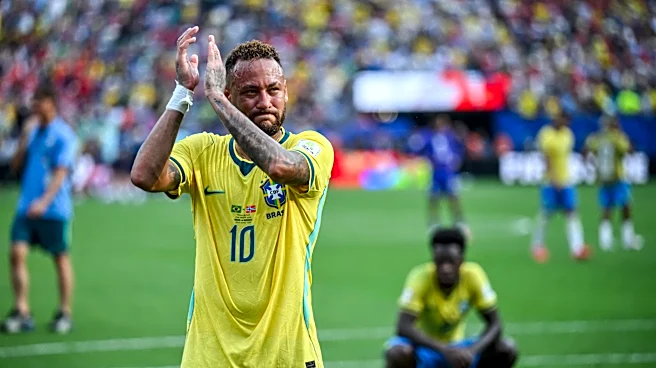
behind and kneed Neymar squarely in the lower back. The Brazilian star collapsed in agony. It wasn't just a foul; it was a full-body collision that sent a shockwave of silence through the stadium and across the host nation. Carried off on a stretcher in tears, the severity of the moment was immediately apparent. This wasn't just an injury; it was the potential end of a dream.
A Fracture in the Nation's Spine
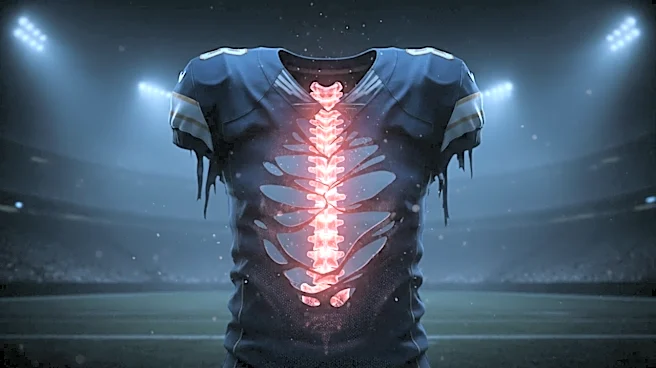
The diagnosis came swiftly and was devastating: a fractured third lumbar vertebra. Neymar was out of the World Cup. Doctors later revealed that if the impact had been just a couple of centimeters to the side, it could have ended his career. The news plunged Brazil into a state of national mourning. President Dilma Rousseff took to Twitter to console the country, while fans gathered outside the hospital where he was treated. The elation of a quarter-final victory evaporated, replaced by anger and a profound sense of dread. The team had lost more than its top scorer; it had lost its emotional and spiritual leader. The question on everyone's mind was no longer if Brazil could win, but how they could possibly continue.
The Unthinkable Unfolds
The semi-final against Germany became a public display of psychological collapse. Before the match, the players held Neymar’s jersey during the national anthem, a tribute that seemed to highlight their fragility rather than their strength. Without their suspended captain, Thiago Silva, and their attacking genius, Brazil was rudderless. What followed was one of the most surreal and shocking results in sports history. Germany scored five goals in the first 29 minutes, four of them in a chaotic six-minute span. The final score, 7-1, was not just a loss; it was a national humiliation on the world's biggest stage. It was the nation's worst defeat and first competitive loss at home since 1975. The event became known as the "Mineirazo," a national trauma that forever scarred Brazilian football.
The Ghost of ‘Neymar-Dependência’
The 7-1 demolition exposed a long-whispered problem in Brazilian football: "Neymar-dependência," or an over-reliance on Neymar. The team wasn't just tactically dependent on his skill; they were emotionally dependent on his presence. When he was removed, the entire structure crumbled. This reliance has haunted the team in subsequent tournaments. In both the 2018 and 2022 World Cups, Brazil's fate seemed inextricably tied to Neymar's form and fitness. The challenge for Brazil since 2014 hasn't just been to develop new stars, but to build a collective identity that is stronger than any single player. It’s a battle to prove that the whole is finally greater than the sum of its parts, and that the team can thrive without a solitary savior.