







Homer's Original Puzzle Box
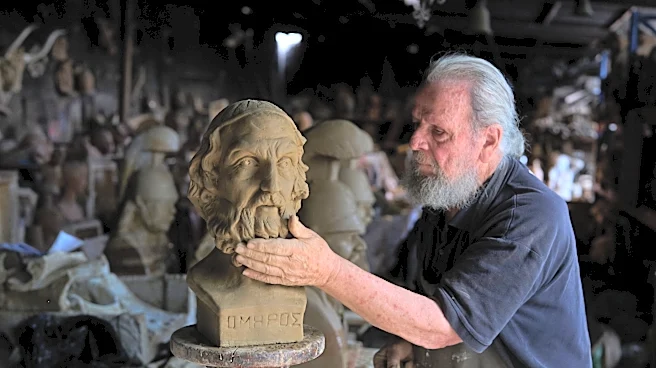
Before film even existed, the ancient Greek poet Homer mastered a narrative trick that filmmakers still use to create instant tension: in medias res, or starting “in the middle of things.” When The Odyssey begins, the Trojan War is a distant memory, and
our hero, Odysseus, has been missing for years. We don’t start with his departure from Troy; we open on his son, Telemachus, navigating a home overrun by suitors, while Odysseus himself is held captive on a remote island. The story throws the audience into a crisis already in progress, only filling in the epic journey of the preceding years through dramatic flashbacks later in the narrative. This structure does two things brilliantly: it establishes the high emotional stakes of Odysseus’s homecoming and builds his legend by having him recount his own mythical encounters with monsters and gods.
Nolan’s Career-Long War on Linear Time
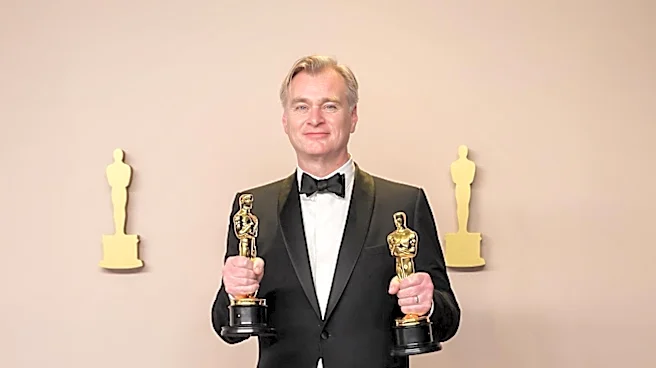
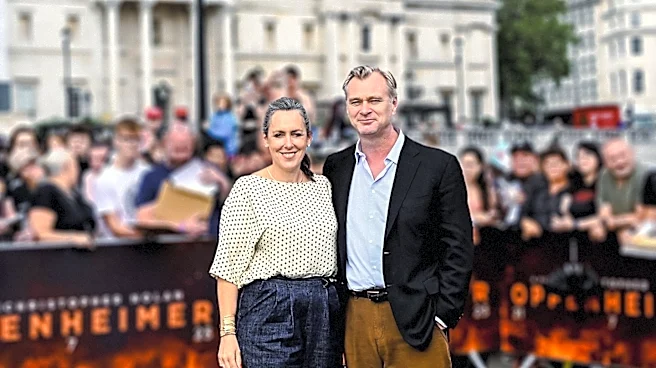
Christopher Nolan has built his entire career on dismantling and reassembling time. In Memento, he used a reverse-chronological structure to place the audience inside the mind of a man who cannot form new memories. In Inception, he layered timelines within timelines, creating a complex dream-heist where minutes in one level of consciousness could equal hours in another. Even his historical films defy linear convention. Dunkirk crosscuts between three different timelines—a week on land, a day at sea, and an hour in the air—to create a panoramic sense of urgency and chaos. Most recently, Oppenheimer fractured its narrative into two distinct perspectives and timelines, using color and black-and-white to separate the protagonist’s subjective experience from the more objective historical record of his political downfall. For Nolan, a story’s structure is never just a container; it’s a tool for exploring a character’s psychology.
A Perfect Narrative Marriage
The news that Nolan’s next epic will be The Odyssey feels less like a new project and more like an inevitability. The poem’s in medias res opening is arguably the ultimate blueprint for the kind of storytelling he has been refining for decades. It offers him the chance to merge his two great loves: grand-scale, practical spectacle and a fragmented, puzzle-box narrative. The structure is a natural fit. He can drop the audience straight into the end-game of Odysseus’s journey, using the hero's captivity as a launchpad for suspense. From there, he can deploy the epic's famous flashbacks—the Cyclops, Circe, the Sirens—not as simple exposition, but as the core of the film's second act, told from the perspective of a weary survivor. This allows him to play with time and perspective while grounding the entire film in a single, powerful emotional objective: the desperation to get home.
What the Structure Offers Nolan's Vision
By adopting Homer's framework, Nolan gets to have it both ways. He can deliver the mind-bending temporal shifts his fans have come to expect while telling one of the most foundational and emotionally resonant stories in Western literature. An Odyssean structure avoids the potential coldness of a purely cerebral puzzle. The mystery isn’t just a structural gimmick; it’s tied to the very human drama of a family torn apart by war and time. We know the destination is Ithaca, but the suspense comes from discovering how Odysseus survived and whether the man who returns can ever truly be the same one who left. It allows Nolan to build his protagonist into a legend through his own tales, making the audience question what is real and what is embellishment—a theme Nolan has explored repeatedly. It’s the perfect vehicle for his distinct style, a 2,800-year-old story that seems tailor-made for cinema’s foremost manipulator of time.