








The Mindset Shift From Price to Value
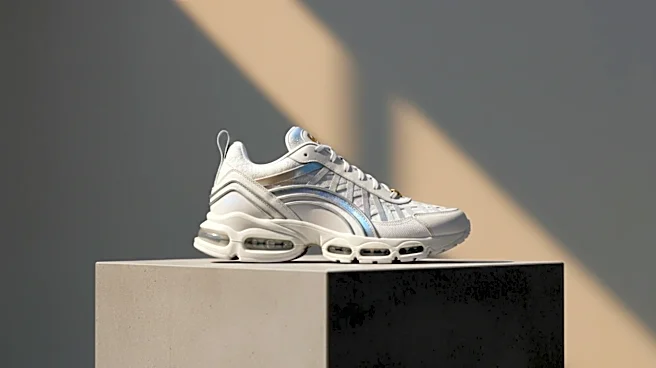
Cost Per Wear, or CPW, is a simple but powerful metric that reframes how you look at expensive purchases. Instead of seeing a $1,200 sneaker as a one-time splurge, CPW helps you see it as a series of smaller costs over the lifetime of your ownership.
It encourages a shift from impulse buys to investment pieces. A cheap, trendy item worn only twice might have a higher cost per wear than a durable, classic sneaker you wear for years. The goal isn't just to justify a high price tag, but to make more informed decisions that align with your budget and build a wardrobe that truly serves you.
How to Calculate Basic Cost Per Wear
The foundational formula for CPW is straightforward and easy to apply. To get a baseline understanding, you only need two numbers: the total price of the item and the number of times you realistically expect to wear it. The formula is: Cost of Item / Number of Wears = Cost Per Wear. For example, if you buy a pair of sneakers for $1,200 and plan to wear them 100 times over their lifespan, the basic CPW is $12. If you wear them 200 times, that number drops to just $6 per wear. This simple calculation immediately puts the initial price into a more manageable context.
Finding the 'Real' Number: Factoring in Hidden Costs and Gains
To get the real cost per wear, you have to look beyond the initial purchase price. A more accurate formula includes maintenance costs and subtracts potential resale value. The upgraded formula is: (Purchase Price + Maintenance Costs - Resale Value) / Number of Wears = True Cost Per Wear. Maintenance can include professional cleanings, which can range from $30 for a basic clean to $60+ for a deep clean on premium materials. You might also buy protective sprays or special brushes. On the other hand, many high-demand sneakers retain significant value. A used pair in good condition can often be resold for 50-70% of its deadstock value, while a very near-deadstock pair could fetch 80-90%. This potential return is a crucial part of calculating the sneaker's total cost of ownership.
A Worked Example: The $1,200 Sneaker
Let's apply this to a hypothetical pair of $1,200 luxury sneakers. Let's assume you'll wear them 150 times over three years. During that time, you get them professionally cleaned six times at $50 each, for a total of $300 in maintenance. After three years, you decide to sell them. Due to their classic design and your careful ownership, you manage to sell them for $500. Here's the math: ($1,200 Purchase Price + $300 Maintenance - $500 Resale Value) / 150 Wears. The net cost of owning the sneakers was $1,000. Divided by 150 wears, your true cost per wear comes out to approximately $6.67. Suddenly, that $1,200 price tag feels far more reasonable.
Beyond the Math: The Intangible Value
While the numbers provide a logical framework, they don't tell the whole story. The true value of an item also includes intangible factors. Consider versatility: how many different outfits can you build around the sneakers? A neutral, classic design will get more use—and thus a lower CPW—than a niche, hard-to-style pair. Durability also plays a key role; a well-made sneaker from premium materials will last longer, allowing for more wears. Finally, there's the joy factor. Wearing something you genuinely love and feel confident in has a value that can't be plugged into a calculator. A great piece isn't just an asset; it's a part of your daily experience.